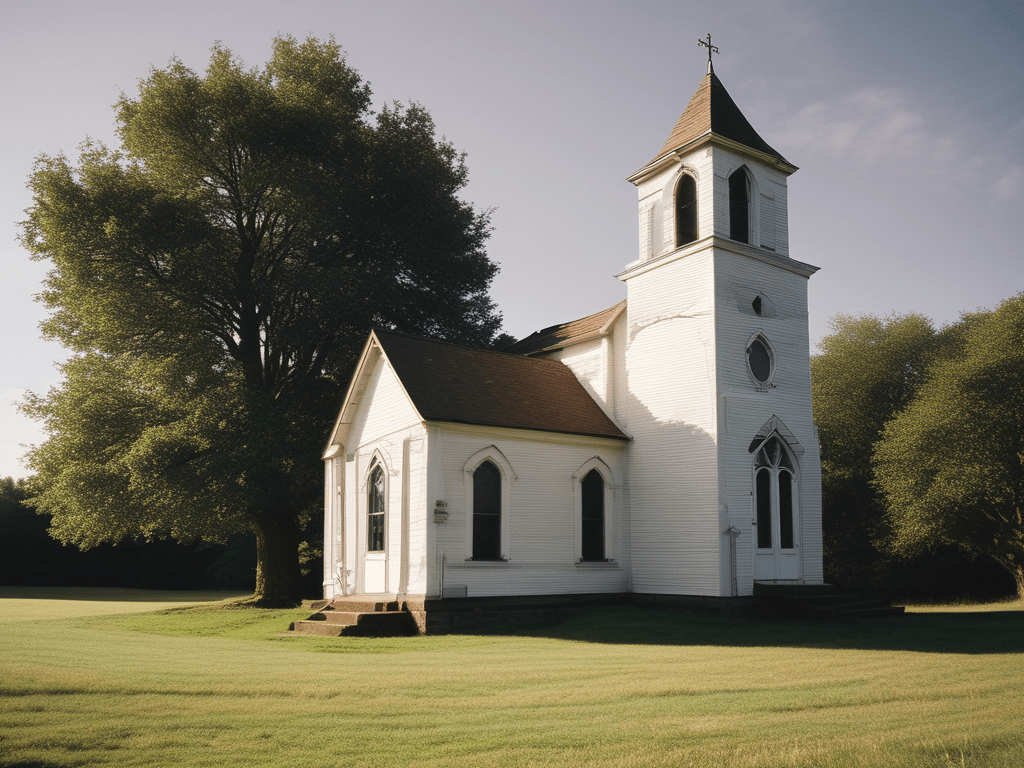
“In God’s eyes, there are no little people or little places,” said Francis Schaeffer in a book of sermons compiled on that topic. His words were on my heart as I considered the small-town churches scattered throughout our country. The church I pastor is a part of the Southern Baptist Convention and the Southern Baptist Conservatives of Virginia. I recently participated on a panel for a Small Town/Rural Church Pastors conference hosted by the SBC of Virginia. There were over a hundred pastors representing their churches that day. In my time with these brothers, I was reminded that a small church is synonymous with normalcy and significance.
As I examined small-town/rural SBC church statistics, I am reminded of the prevalence and opportunity to share the Gospel and make disciples in these types of churches. According to the SBC website, there are currently 46,906 SBC Churches. Of these churches, the SBC Annual Church Profile Report reveals that 73% are churches with 100 or fewer regular attendees. Surprisingly, the number of small churches is actually on the rise. According to the ACR, “The SBC is increasingly becoming comprised of the smallest churches, according to the latest ACP. From 2017 to 2022, the percentage of Southern Baptist churches that were below 50 in worship attendance grew from 36% to 45% of the convention.”
What does this all mean? Why should we care? How does this impact the Kingdom? Small church pastors are the norm in SBC life. Many of these churches operate with a single-staff pastor. Some of these churches will not grow too much in attendance because they cannot sustain more people in their buildings and resources, which is ok.
The small church and its leaders are a particular burden for me because I served for over seven years in two rural churches, one a traditional rural church and another a small town/rural church plant. Additionally, my father has served a small-town rural church for over 26 years in western PA. I know the blessings and hardships of pastoring in such environments. I know the internal wrestling of biblical and cultural expectations for pastors and the small church.
Below you will find some general observations, personal exhortations, and ministry resources.
Observations
- Church size does not determine your significance in the Kingdom of God or your value as a Pastor.
- The calling of a small-town pastor is equal to that of a large church pastor.
- The influence of a rural Pastor can be as significant as that of a suburban or urban Shepherd.
- Leadership conferences, denominations, and publishers should offer more resources and relational support to help the 73% of churches with 100 or fewer attendees.
- The Word of God must determine the definition of success for all pastors. Faithfulness does produce fruitfulness, although the fruit is observed and harvested in different ways.
Exhortations
- Small-town, Rural Pastors need each other. Reach out to a brother pastor, join a network, or start your own among like-minded pastors who live near your church.
- Consume leadership resources rooted in Scriptural expectations for Pastors and define success according to God’s standards.
- Avoid the comparison trap of comparing yourself to another church, another leader down the road, or someone who lives within a different context.
Resources
- No Little People: 16 Encouraging Sermons on Human Weakness and God’s Sufficiency by Francis Schaeffer
- Liberating Ministry from the Success Syndrome by R. Ken Hughes
- The Grasshopper Myth: Big Churches, Small Churches, and the Small Thinking that Divides Us by Karl Vaters
- Small Church Essentials: Field-Tested Principles for Leading a Healthy Congregation of under 250 by Karl Vaters
- Shepherding the Small Church: A Leadership Guide for the Majority of Today’s Churches by Glenn C. Daman
Discover more from Valley Shepherds
Subscribe to get the latest posts sent to your email.
 Valley Shepherds