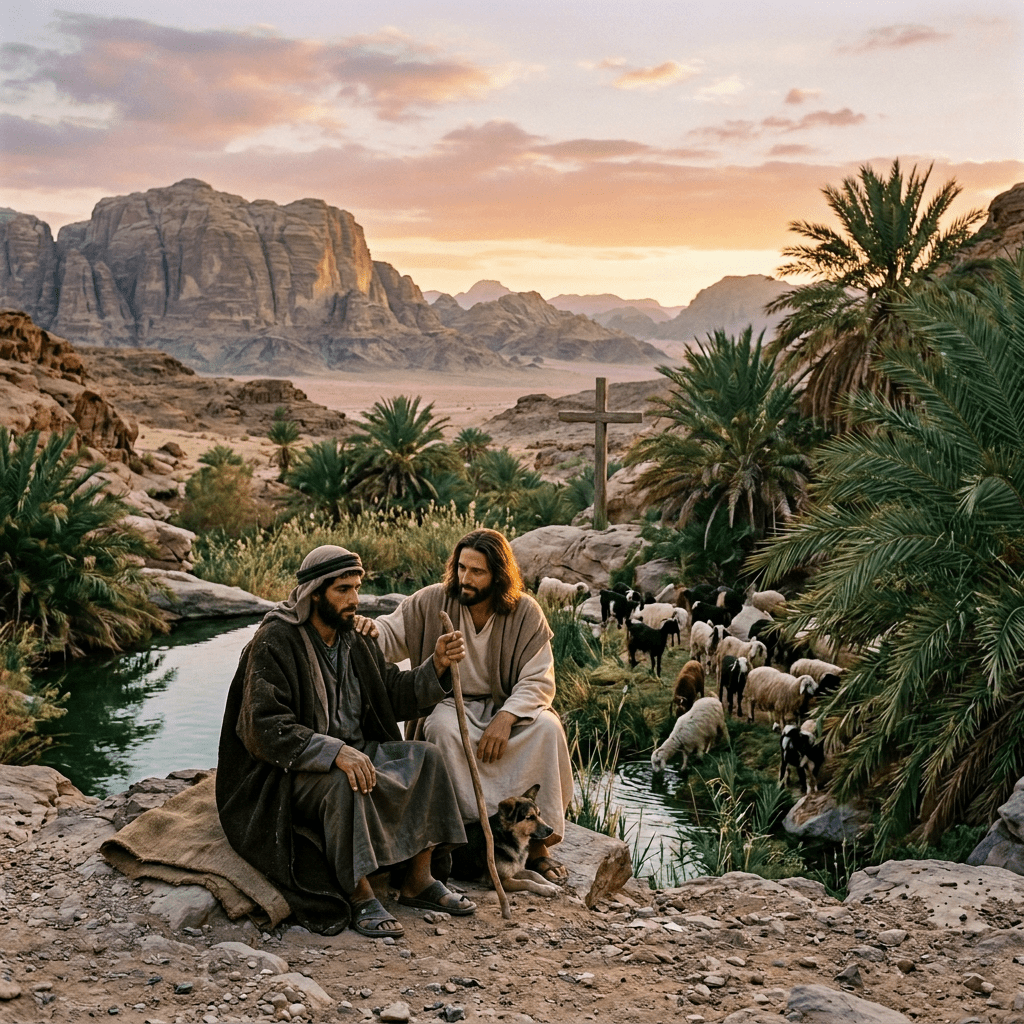
Mark 6:31 “Come away by yourselves to a desolate place and rest a while.”
Pastors sometimes assume withdrawal is what faithful people do only after ministry ends. Jesus’ life tells a different story. Jesus withdrew in the middle of ministry—not because the mission was unimportant, but because communion with the Father was essential to the mission.
Mark 1:35 gives one of the clearest examples. After an intense evening of healing and ministry, Jesus rose early, went to a desolate place, and prayed. James Edwards notes that Mark records Jesus praying at three strategically significant moments: early in the Galilean ministry, after feeding the five thousand, and in Gethsemane. Each occurs in solitude and under pressure.1
Luke 5:15–16 makes the pattern even clearer. As Jesus’ reputation spread and crowds gathered to hear him and seek healing, “he would withdraw to desolate places and pray.” Increased demand did not eliminate withdrawal. If anything, the growth of ministry made communion with the Father more necessary.2
Siang-Yang Tan emphasizes the intentionality of this practice. Jesus deliberately stepped away from people in order to pray in solitude. That is an important correction for pastors who interpret every open space in the calendar as an opportunity to do more ministry.2
The forty days in the wilderness in Matthew 4 represent a different kind of withdrawal—extended, testing, preparatory, and Spirit-led. This was not a vacation. Yet it still demonstrates that significant seasons of ministry can be preceded by significant seasons of solitude, prayer, fasting, and dependence on the Word of God.3
Then Jesus explicitly invites the disciples into the same rhythm. After they return from itinerant ministry in Mark 6, he tells them to come away and rest. Collins and Attridge observe that the wording echoes Jesus’ own earlier withdrawal and suggests a time of rest and likely prayer after intense preaching, healing, and ministry activity.4
This pattern has immediate pastoral application. After a demanding Sunday, funeral week, revival, conflict, construction project, crisis season, or stretch of hospital ministry, pastors should not assume the only faithful response is to keep pressing. There are times when the Christlike response is to withdraw.
Withdrawal does not require disappearing for a month. It can take the form of a quiet morning before the phone begins, a half-day prayer retreat, a recurring day away from church property, or a brief overnight retreat for Scripture, prayer, walking, and sleep. The essential movement is away from demand and toward the Father.
The pastoral temptation is to believe the needs of people justify the neglect of the pastor’s own soul. Jesus never modeled that logic. He loved people perfectly, and he still withdrew. He was accessible, and he still sought solitude. He carried the mission of redemption, and he still prayed.
Pastors do not need to apologize for following Jesus’ pattern. There is wisdom in hearing Christ’s invitation not only as words spoken to the Twelve, but as a pattern for all who spend themselves in ministry: come away, be with the Lord, and rest a while.
Sources for This Post
1. James R. Edwards, The Gospel according to Mark, Pillar New Testament Commentary (Grand Rapids: Eerdmans, 2002), 65–66.
2. Siang-Yang Tan, Rest: Experiencing God’s Peace in a Restless World (Vancouver, BC: Regent College Publishing, 2003), 63–65.
3. D. A. Carson, “Matthew,” in The Expositor’s Bible Commentary, vol. 8 (Grand Rapids: Zondervan, 1984), 112.
4. Adela Yarbro Collins and Harold W. Attridge, Mark: A Commentary on the Gospel of Mark, Hermeneia (Minneapolis: Fortress Press, 2007), 318.
Discover more from Valley Shepherds
Subscribe to get the latest posts sent to your email.
 Valley Shepherds