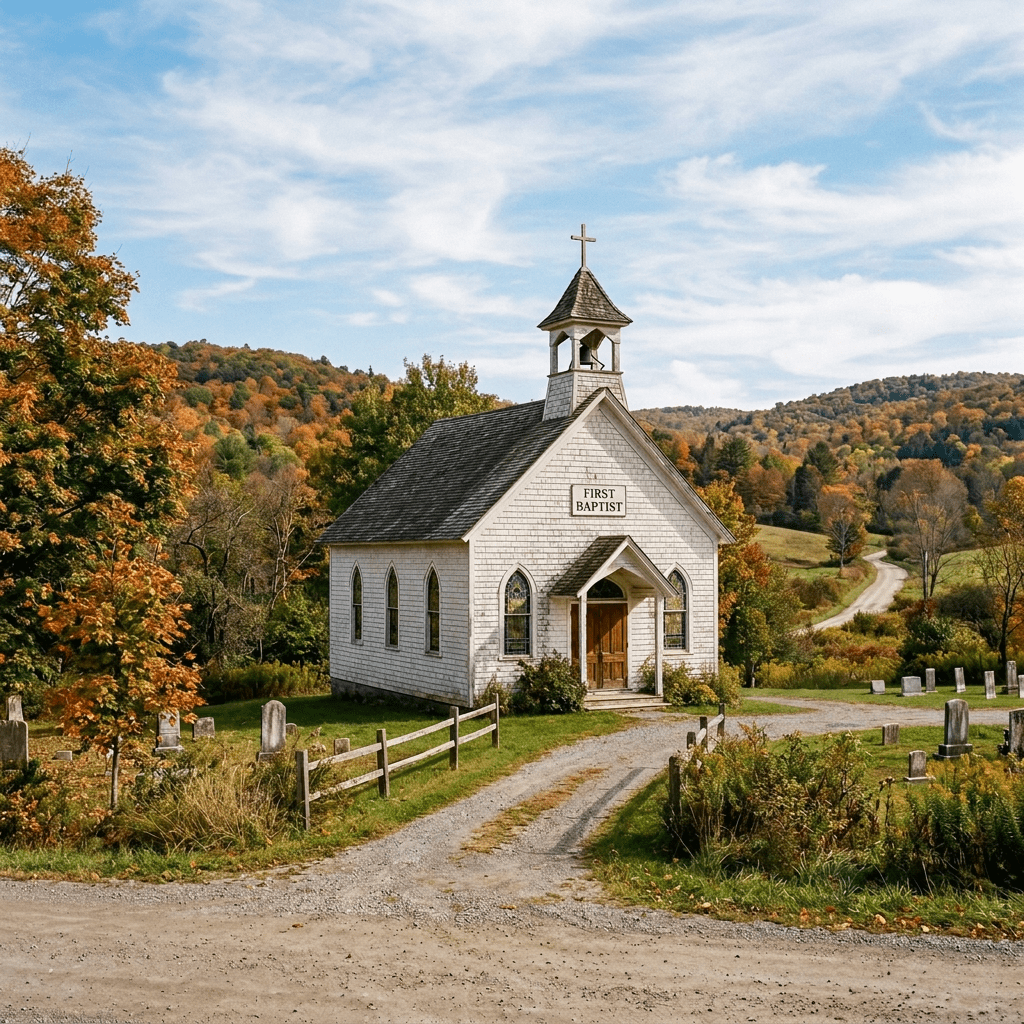
Why small-town and rural pastors matter more than their visibility suggests!
When conversations about church leadership focus on large congregations, growing cities, and highly visible ministries, it is easy to overlook the thousands of pastors serving in communities that rarely make headlines. Yet small-town and rural churches are not peripheral to God’s mission. They are deeply woven into the religious landscape of the United States and the Southern Baptist Convention.
Glenn Daman has spent decades reminding the church that rural ministry is not a lesser calling. The pastor in a community of eighty people bears the same biblical responsibility to preach, disciple, shepherd, and lead as the pastor of a congregation of thousands. The difference is not the dignity of the calling but the context in which the calling is lived out.
The numbers reinforce the point. Research indicates that a substantial share of Southern Baptist congregations serve rural contexts, and that small churches represent a dominant portion of American congregational life. Hartford Institute research has likewise reported that half of U.S. congregations have sixty or fewer people in weekly worship, while perhaps three-quarters have one hundred or fewer.
Additionally, small churches contribute to Great Commission work in ways scale alone cannot measure. Rural congregations may report fewer baptisms than suburban or urban churches, but they are often remarkably stable. They maintain a gospel presence in communities where there may be few other evangelical churches, fewer institutional resources, and less population growth.
There is even a compelling Gospel reminder here: much of Jesus’ public ministry unfolded not in the great centers of the ancient world but among towns, villages, and rural communities. Daman and Jeffrey Clark note the Gospel writers’ repeated attention to these smaller places. The kingdom of God was proclaimed among ordinary people in ordinary communities.
That should reshape how we think about significance. Faithfulness in a small place is not small faithfulness. The value of a pastor’s ministry is not always determined by the size of their platform, attendance, budget, or visibility. A shepherd who knows his people, preaches Christ, baptizes converts, buries the dead, visits the sick, counsels families, and patiently disciples a community is obediently participating in the work of eternal consequence.
But the very closeness that makes rural ministry beautiful can also make it exhausting. The pastor is not simply a Sunday preacher. He is often a neighbor, chaplain, counselor, civic presence, crisis responder, and friend. In many congregations, he may also be the only paid minister—or he may hold another job during the week. That reality makes pastoral rest more than a lifestyle issue. It is a matter of stewardship.
The rest of this series will explore why sustainable ministry requires intentional rhythms of Sabbath, spiritual rest in Christ, purposeful withdrawal, and, where possible, extended seasons of sabbatical renewal. But it begins here: the pastors of small places matter, and their long-term health matters because the churches and communities they serve matter to God.
This 8 Post Series is adapted from a research paper written by Dr. Jamie McClanahan called “The Priority of Rest-Taking and Renewal Among Small Town Pastors”. It is intended to encourage and equip fellow pastors.
Sources for This Post
1. Aaron Earls, “Complicated Picture of Southern Baptist Churches Emerges from Statistical Analysis,” Lifeway Research, March 10, 2025.
2. Scott Thumma, “The Challenging Climate for US Congregations,” Faith Communities Today / Hartford Institute for Religion Research, February 11, 2020.
3. Glenn C. Daman, The Forgotten Church: Pursuing Growth in the Small Town Church (Chicago: Moody Publishers, 2002), 144.
4. Aaron Earls, “Small Churches Continue Growing—but in Number, not Size,” Lifeway Research, October 20, 2021.
5. Lifeway Research, “Southern Baptist Membership Decline Slows, Baptisms and Attendance Grow,” May 7, 2024.
6. “The Annual Church Profile Gauges Health of Denomination,” The Baptist Record, September 22, 2023.
7. Glenn C. Daman and Jeffrey A. Clark, The God of Small Places: Rediscovering the Importance of the Small-Town Church (Grand Rapids, MI: Kregel Ministry, 2022), 19, 142.
8. Darryl W. Stephens, Bivocational and Beyond: Educating for Thriving Multivocational Ministry (Lanham, MD: Rowman & Littlefield, 2022), 20.
Discover more from Valley Shepherds
Subscribe to get the latest posts sent to your email.
 Valley Shepherds