-
Intentionally Developing Leaders in the Local Church

How can one pastor figure all that out and do the necessary work? I must confess that I often forget that I am one person with finite limitations. The tension only builds as we consider our roles and responsibilities at home, in the community, to our denomination, and to the Kingdom of God in our region.
Many questions arise out of this tense reality. First, do we have enough mature leaders to nurture current and potential disciples? Second, do we have an intentional plan to develop church leaders? Finally, what will happen if we do not have enough leaders and have no deliberate plan to develop them in our local churches?
During this time I want you to prayerfully consider how you can intentionally raise up mature disciples of Jesus who can lead others in your local church. When we unpack this challenge, it begins by examining your current leadership structures for biblical clarity and organizational alignment. The next step is creating a clearly defined pathway to express this clarity and alignment and to develop mature spiritual leaders. These future mature leaders could be described as a Pastor/Elder, Associate Pastor, Deacon, Ministry Leader/Director, Church Staff, Small Group Leader, Missionary, or Church Planter. There is an old saying that is applicable, “If you fail to plan, you plan to fail.” I encourage you to prayerfully consider meeting with your church leaders to develop a plan. It will benefit your longevity in ministry and the health of your church and give assurance to the next generation of leaders.
Many churches have implemented an intentional Ministry Residency Program to help raise leaders to serve in their church and be sent out into greater Kingdom work. Some are highly structured, and others are more informal. In a sense, every residency must uniquely express the church leadership and local ministry context. In other words, pastors should not try to carbon-copy other Residency Programs but should strive to prayerfully and collaboratively develop their own.
I have sought to provide you with resources that can help you discover and implement Leadership Pathways/Pipelines and initiate General Ministry Residency Programs.
Resources on Leadership Pathways/Pipelines and Church Residency
Books
- How to Start a Residency? By Clint Clifton (Free E-Book)
- Designed to Lead: The Church and Leadership Development by Eric Geiger
- Building Leaders: Blueprints for Developing Leaders at Every Level of Your Church by Aubrey Malphurs and Will Mancini
- The Multiplication Effect: Building a Leadership Pipeline that Solves Your Leadership Shortage by Mac Lake
Article
- “Our Pastoral Residency Program Reading List” by Jarrid Wilson of the Gospel Coalition
- 7 Crucial Components of a Church Residency Program by Vanderbloemen
- Ten Steps to Launching a Residency in Your Church: North American Mission Board
- What is a Leadership Pipeline by Todd Adkins
- Why You Need a Leadership Pipeline in Your Church? By Mark Warnock
- How to Build a Leadership Pipeline in Your Church by Brandon Kelley
Media
- Leadership Pipeline Training by Lifeway’s Ministry Grid (This is a Paid Service)
- Starting Residencies: North American Mission Board (Youtube)
- Starting a Church Planting Residency by Bill Elliff (Youtube)
Other
-
Mentoring Component 1: Paul Nurtured a Personal Relationship with Timothy

In these posts regarding mentoring, I will contend that Paul’s mentoring approach to raising Timothy up as a leader includes nurturing a person relationship with him, sharing life alongside of him, training him in an incremental way, and releasing him to multiply into other leaders. I will share the first of these components in this post.
Christian leadership is personal more than professional. It requires tenderness and discernment in word and action. In Acts 16:1-3, Paul encounters a young man named Timothy in the region of Lystra and Derbe. Timothy’s parentage is mixed with a mother that is Jewish and a father that is a Gentile (Acts 16:1). We are not told of how or when Timothy believed the Gospel. The Scriptures reveal that he is a third-generation Christian who was taught the word by his mother Eunice and grandmother Lois (2 Timothy 2:5). We do know that Timothy earned a good reputation amongst the believers in Lystra and Iconium and Paul desires Timothy to come with him on his missionary journeys (Acts 16:2). In fact, it was Timothy’s witness and reputation among the believers that attracted Paul to him. In Acts: An Introduction and Commentary, I. Howard Marshall writes, “Paul’s attention was drawn to the young man by the good report which was given of him by the Christians in the neighborhood, both in Lystra itself and in Iconium, some 18 miles (31 km) away.”[1] The personal and paternal nature of Paul’s approach also satisfies Timothy’s need for a spiritual father. The Scriptures say Timothy’s father was a Greek and it is inferred that his earthly father did not have much influence in his spiritual life. The Scriptures also reveal his Jewish mother, and grandmother taught him the Scriptures (2 Timothy 1:5), and it was Paul who circumcised him, an act traditionally reserved for a father (Acts 16:2b).[2] John Polhill clarifies the necessity of Paul’s circumcision of Timothy as preparation for their upcoming ministry. He writes: “Timothy would have been considered a Jew. His father, however, being a Greek, would not have had his son circumcised; and the local Jews were aware of this (v. 3). Thus, Paul had Timothy circumcised. Paul always worked through the Jewish synagogues where possible. To have had a member of his entourage be of Jewish lineage and yet uncircumcised would have hampered his effectiveness among the Jews.”[3]
Paul, as Timothy’s mentor, begins his journey with Timothy by preparing him for future ministry among Jews and Gentiles. Timothy surrenders to Paul’s request for preparation. It is an act of submission that begins a relationship of trust between the two men for many years.
The language of Paul to Timothy in his letters to the churches reveals a close relationship that is consistently paternal and personal. Paul is explicit in affirming his confidence in Timothy as strong believer, while expressing intimacy with him as a son in the faith in at least three churches. There are six different times Paul refers to Timothy as a child or son (I Cor. 4:17; Phil. 2:22; I Tim. 1:2, 18; 2 Tim. 1:2; 2:1). The word Paul uses to describe Timothy as his son is “teknon”. Louw and Nida explain, “Teknon can be used for a person of any age for whom there is a special relationship of endearment or association.”[4] The first example of this use is the letter to the Corinthian church during Paul’s third missionary journey in AD 54-55.[5] In I Cor. 4:14-15a, Paul writes to admonish the believers as “beloved children” and tells them they do not need guides, but rather they need a spiritual father. He tells them in verse 15, “I became your father in Christ Jesus through the gospel.” He encourages them to imitate him as a father. He then explains in verses 16-17 that this is the reason he has sent Timothy, his “beloved and faithful child in the Lord”, to remind them of his “ways in Christ.” In The New American Commentary on I Corinthians, author Mark A. Taylor summarizes these verses. He writes, “Timothy, like the Corinthians, is also Paul’s “beloved child” (NASB), but to this descriptor Paul adds “and faithful in the Lord.” Timothy is a trustworthy child. Paul desires the same in his children in Corinth.”[6] Paul’s confidence in Timothy as a model of a son in submission to a father is to be an example for the Corinthians to follow. Thomas Schreiner writes, “The Corinthians are exhorted to imitate Paul, and that was why Paul sent Timothy to them, for in observing and following the example of Timothy they would be imitating Paul.” [7]
The second example of paternal and personal language is the letter to the church in Philippi in AD 60-62, written during Paul’s imprisonment in Rome.[8] In Philippians 1:1, the letter addresses “the saints in Christ Jesus who are at Phillipi”. The letter is from Timothy and Paul who are both referred to as “servants of Christ”. In chapter two Paul distinguishes Timothy as a leader unlike others he is mentoring. His intention is to send Timothy to the Philippians because he will be “genuinely concerned” for them and will not seek his own interest, but those of Jesus Christ. Paul makes an emphatic statement of confidence, which reflects his level of trust and intimacy with Timothy. In verse 22 he says, “But you know Timothy’s proven worth, how as a son with a father he has served with me in the gospel.” The mentoring of Timothy is framed in paternal terms with an application of master and apprentice. In The IVP Commentary on Philippians, Gordon Fee, comments on the multi-faceted relationship of Paul to Timothy in verse 22. He writes, “The Philippians well know, that relationship is like that of a son with his father, the apprentice son who exhibits the mind and concerns of his father, alongside whom he has served for so many years[9]
A final example is Paul’s letters to Timothy in the pastoral epistles. In I Timothy, written about AD 60-62, the second verse of the first chapter communicates Paul’s relationship “to Timothy, my true child in the faith.”[10] The word “true” can be understood as “one who is considered a valid member of a family, legitimate, true.[11] In the same chapter in verse 18, Paul charges Timothy once again as “my child”. In 2 Timothy, like 1 Timothy, Paul refers to Timothy as his “beloved child.” The word employed to describe “child” is “beloved” and it means “one who is in a very special relationship with another[12] During the writing of 2 Timothy, between AD 64-67, Paul was imprisoned in Rome and facing imminent death.[13] The letter is reflective of deep love and emotion between Paul and his son in the faith Timothy. II Timothy 1:4 Paul writes to Timothy, “As I remember your tears, I long to see you, that I may be filled with joy.” This verse reflects the depth of connection between these two men’s souls. Later in that same letter in 2 Timothy 4:13, Paul requests Timothy to “come to him soon.” Paul, recognizing the end is near for him, twice implores Timothy to come and see him before his impending death sentence (4:9, 21). The word used to describe this longing is a strong compound Greek verb epipotheo. It means to “long for desire” for the purpose of being filled with joy.[14] Some of the joy Paul had known is that the gospel would continue to be passed down because of faithful men like his friend and mentee Timothy.
These three examples, and the wording employed by Paul to describe his special relationship with Timothy, demonstrate a personal and paternal approach to developing Timothy as a leader. It is an intimate mark of distinction between Paul and Timothy. In his letters, Paul did not refer to other men he discipled as a beloved son; however, he does commend that others follow his example as Timothy did with his father mentor.
As I reflect upon Paul’s initial engagement and language employed to describe his relationship with Timothy, I consider how important it is to frame the Christian mentor and mentee relationship with family language and behavior. Paul’s mixture of paternal and pastoral words and actions shaped Timothy’s heart and fueled his heart to fulfill his Gospel calling with passion and confidence.
[1] I. Howard Marshall, Acts: An Introduction and Commentary, vol. 5, Tyndale New Testament Commentaries (Downers Grove, IL: InterVarsity Press, 1980), 275.
[2] David G. Peterson, The Acts of the Apostles, The Pillar New Testament Commentary (Grand Rapids, MI; Nottingham, England: William B. Eerdmans Publishing Company, 2009), 450.
[3] John B. Polhill, Acts, vol. 26, The New American Commentary (Nashville: Broadman & Holman Publishers, 1992), 343.
[4] Johannes P. Louw and Eugene A. Nida, Greek-English Lexicon of the New Testament: Based on Semantic Domains, 2nd Ed., vol. 1 (New York: United Bible Societies, 1996), 109.
[5] Fitzmyer, Joseph A. First Corinthians. Anchor Yale Bible. (New Haven: Yale University Press, 2008), 213–215, 582–584.
[6] Mark Taylor, 1 Corinthians, ed. E. Ray Clendenen, vol. 28, The New American Commentary (Nashville, TN: B&H Publishing Group, 2014), 126.
[7] Thomas R. Schreiner, 1 Corinthians: An Introduction and Commentary, ed. Eckhard J. Schnabel, vol. 7, Tyndale New Testament Commentaries (London: Inter-Varsity Press, 2018), 105.
[8] Moisés Silva, Philippians. 2nd ed. Baker Exegetical Commentary on the New Testament. (Grand Rapids: Baker Academic, 2005) 1-10, 112-118.
[9] Gordon D. Fee, Philippians, vol. 11, The IVP New Testament Commentary Series (Westmont, IL: IVP Academic, 1999), 118.
[10] Towner, Philip H. The Letters to Timothy and Titus. New International Commentary on the New Testament. Grand Rapids: Eerdmans, 2006, 1–25, 41–49.
[11] William Arndt, Frederick W. Danker, et al., A Greek-English Lexicon of the New Testament and Other Early Christian Literature(Chicago: University of Chicago Press, 2000), 202.
[12] William Arndt, Frederick W. Danker, et al., A Greek-English Lexicon of the New Testament and Other Early Christian Literature, 7.
[13]I. Howard Marshall, The Pastoral Epistles. International Critical Commentary. London: T&T Clark, 1999, 1–12, 793–799.
[14] Ralph Earle, The Expositors Commentary, vol. 11, I & II Timothy, ed. Frank E. Gaebelein, (Grand Rapids: Zondervan, 1981), 394.
-
Defining Terms: Spiritual Mentoring and Church Leadership

Relationships are the secret sauce of leadership development. Mentoring is leadership by relationship. It is tricky to define “mentoring”, but there are some features worth emphasizing as we consider several definitions. In this post, I would like to consider at least three helpful definitions as it relates to the ministry mentoring relationships. In the book, Spiritual Mentoring: A Guide for Seeking and Giving Direction, authors Keith R. Anderson and Randy D. Reese write, “Spiritual mentoring is a relational process in which a mentor, grounded in their own faith, guides a mentee towards deeper spiritual maturity through intentional conversation, shared practices, and modeling a life of faith. It integrates prayer, scripture, and discernment to align the mentee with God’s purpose.”[1] Their definition explains the process of mentoring as relational and emphasizes some priority mentoring activities to employ, while ultimately focusing on the alignment of God’s purposes for the mentee. They also imply that the mentor must be near the mentee so they can observe and imitate the mentor’s life. In other words, proximity is irreplaceable in mentoring.
A second definition by Paul D. Stanley and J. Robert Clinton emphasizes the resources of the mentor and the importance of transferring of them to the mentee. They write: “Mentoring is a relational process in which a mentor, who knows or who has experienced something, transfers that something (resources of wisdom, information, experience, confidence, insight, relationships, status) to a mentoree, at an appropriate time and manner, so that it facilitates development or empowerment.”[2] This definition emphasizes a transmission of varied resources through relational means from wise mentor to a less experienced mentee. Certainly, this idea is present when Paul tells Timothy to share what he has received from him with other faithful men (2 Tim. 2:2). This is a primary way the Gospel is passed from one generation to the next.
The third definition emphasizes the deep and lasting impact a mentor has on a mentee. Bill and Howard Hendricks share this in their book, Men of Influence: The Transformational Impact of Godly Mentors. They write, “Mentoring is what happens when one man affects another man deeply enough to where he later declares, ‘I never would have become who I am were it not for that man’s influence’.”[3] Certainly, this could be said of mentees like Joshua, Elisha, the 12 Apostles, and Timothy in the Scriptures. Perhaps in your own life, you can think of a person whose relational influence was a determining factor in your character formation.
In the posts to come, I will demonstrate the mentoring relationship of Paul to Timothy embodies the features of these definitions and can be observed in Paul’s missionary journeys and in several of his letters to the churches. Evidence for this is also seen in the many instances Timothy appears in Paul’s writings. Ramón Trevijano writes that Timothy is, “The most highly esteemed disciple and coworker of the apostle Paul; he is named 17 times in the epistles, six times in the book of Acts and once in the epistle to the Hebrews (13:23).”[4] I hope you will join me on this brief mentoring journey ahead.
[1] Keith R. Anderson and Randy D. Reese. Spiritual Mentoring: A Guide for Seeking and Giving Direction. (Downers Grove, IL: InterVarsity Press, 2003), 13–19.
[2] Stanley, Paul D., and J. Robert Clinton. Connecting: The Mentoring Relationships You Need to Succeed in Life (Colorado Springs: NavPress, 1992), 33-34.
[3] Bill Hendricks and Howard Hendricks, The Transformational Impact of Godly Mentors (Chicago, Moody Press, 2019), 62.
[4] Ramón Trevijano, “Timothy, Disciple of Paul,” in Encyclopedia of Ancient Christianity, ed. Angelo Di Berardino and James Hoover, trans. Joseph T. Papa, Erik A. Koenke, and Eric E. Hewett (Downers Grove, IL: IVP Academic; InterVarsity Press, 2014), 793.
-
Biblical Meaning and Significance of Mentoring

Biblically, the word “mentor” is not a word employed by Scripture writers. However, its sense and meaning can be observed throughout Scriptures in several words and relationships. Walter Brueggemann acknowledges this when he writes, “Mentoring as an idea is quite a modern notion. The practice of mentoring, however, is quite old.”[1] In the Old Testament, Hebrew words such as “teacher or guide” (Moreh)[2], “counselor or advisor” (Yoets)[3], and “shepherd” (Roeh)[4] give clear sense of the word. In the New Testament, words such as “teacher” (didaskolos)[5], “guide” (kathegetes)[6], and “overseer” (Episkopos)[7] reflect the nature of mentoring for the purpose of spiritual growth and leadership development to individuals and the community of faith.
The meaning and application of these mentoring words can be seen in several important mentoring relationships in the Old and New Testament. For example, in the Old Testament, mentoring can be observed in relationships of Jethro and Moses (Exodus 18), Moses and Joshua (Numbers 27:18-23), and Elijah and Elisha (I Kings 19:19-21).[8] In the New Testament, the mentoring example of Jesus and the Apostles in the Gospels and Paul and Timothy in Acts and the Pauline Epistles reveals mentoring relationships. Through these examples we can see mentoring as a biblical way to disciple leaders. In his book Mentor: How Along-The-Way Discipleship Will Change Your Life, Chuck Lawless, reinforces this when he succinctly writes, “Mentoring is Biblical”[9]. He explains that Jesus’ investment in 12 men and Paul’s modeling of Jesus by pouring into several men, including Timothy, is a good model for believers in Christ. He concludes, “If Jesus and Paul made disciples through this means, it’s a good pattern for us to follow.”[10] The lack of a biblical word for “mentor” does not matter because of the many synonymous terms for “mentoring” and the general meaning and sense of the word is verifiable throughout the Scriptures in the many mentoring relationships we observe.
Biblical mentoring is woven into the fabric of the Gospel Story. It is a primary way God chose to develop leaders to carry out his purposes in both the Old and the New Testament. The example of Jesus and the disciples is a master-class on intentional mentoring for a key purpose, the launching of the NT Church into the World to carry out the Great Commission. Many books have been written to capture Jesus’ approach to discipling. One that has become a classic is Robert Coleman’s “The Master Plan of Evangelism.” In his book he shares eight guiding principles of Jesus’ way of developing the disciples for the task ahead. He writes, “It all started by Jesus calling a few men to follow him. This revealed immediately the direction his evangelistic strategy would take. His concern was not with programs to reach the multitudes, but with men whom the multitudes would follow. Remarkable as it may seem, Jesus started to gather these men before he ever organized an evangelistic campaign or even preached a sermon in public. Men were to be his method of winning the world to God.” (Coleman, 21). The short book is worth your time.
In the posts ahead we will consider some definitions of spiritual mentoring and then will focus on several components of the Paul and Timothy mentoring relationship.
[1] Dean K. Thompson and D. Cameron Murchison, eds., Mentoring: Biblical, Theological, and Practical Perspectives (Grand Rapids, MI: Eerdmans, 2018), 7.
[2] Brown, S. R. Driver, and Charles A. Briggs. The Brown-Driver-Briggs Hebrew and English Lexicon. (Peabody, MA: Hendrickson Publishers, 2006), 435–436.
[3] William L. Holladay, A Concise Hebrew and Aramaic Lexicon of the Old
Testament (Grand Rapids: Eerdmans, 1988), 149.
[4] Bruce K. Waltke and M. O’Connor, An Introduction to Biblical HebrewSyntax (Winona Lake, IN: Eisenbrauns, 1990), 597–598.
[5] Horst Balz and Gerhard Schneider, eds., Exegetical Dictionary of the New Testament, vol. 1 (Grand Rapids: Eerdmans, 1990), 315–317.
[6] Walter Bauer et al., A Greek-English Lexicon of the New Testament and Other Early Christian Literature, 3rd ed. (Chicago: University of Chicago Press, 2000), 529.
[7] Gerhard Kittel and Gerhard Friedrich, eds., Theological Dictionary of the New Testament, vol. 2, trans. Geoffrey W. Bromiley (Grand Rapids: Eerdmans, 1964), 608–611.
[8] Dean K. Thompson and D. Cameron Murchison, eds., Mentoring: Biblical, Theological, and Practical Perspectives (Grand Rapids, MI: Eerdmans, 2018), 10-13.
[9] Chuck Lawless, Mentor: How Along The Way Discipleship Will Change Your Life (Nashville: Lifeway Press, 2017), 9.
[10] Chuck Lawless, Mentor: How Along The Way Discipleship Will Change Your Life, 9.
-
Origins of Mentor and Mentoring

As I typed this out, my mind wandered to Sméagol (aka Gollum) in the Lord of the Rings. Tolkien writes: “The most inquisitive and curious‑minded of that family was called Sméagol. He was interested in roots and beginnings; he dived into deep pools; he burrowed under trees and growing plants; he tunneled into green mounds; and he ceased to look up at the hill‑tops, or the leaves on trees, or the flowers opening in the air: his head and his eyes were downward.”[1] It is good to be curious about beginnings and that is true of the journey of the word “mentor” from a proper to a common noun.
The history of the word “mentor” from a proper noun to a common noun reveals modern-day applications for leadership development. The first mention of the word “mentor” refers to a character in Homer’s Odyssey.[2] Mentor, as a proper noun, was the name of the advisor appointed to Telemachus, King Odysseus’ son, during the Trojan war around 1200 BCE.[3] Mentor’s ancient role as a counselor and guide shapes our modern definition.
The word “mentor” would remain a proper noun until 1699 when Fénelon, a French author, broadened its use to mean a counselor full of wisdom.[4] By 1750, the word was employed by the Oxford English Dictionary as a term for “a wise counselor or guide.”[5] In the mid-18th century, the common noun was adopted into English. For example, the word and its meaning as a wise advisor are found in the literary and philosophical writings of Samuel Johnson (1709-1784).[6] In the 19th Century, with the expansion of a formal education, the term became associated with teachers and advisors in education and business settings.[7] By 1828, Noah Webster defines “mentor” as a “wise and faithful counselor or monitor.”[8] In the 20th century, the term became more broadly applied to education, business and career development. Mentoring became formalized and programmatic during this era.[9] In Seasons of a Man’s Life, Daneile Levinson’s describes how the term is understood during this era. He writes, “A mentor is typically a senior person in the world of work who, in the context of a hierarchically structured organization, takes a younger person under his wing, teaches and advises him, and fosters his professional and personal development. The mentor acts as a teacher, sponsor, guide, exemplar, and counselor.”[10]
The term today is defined as “an experienced and trusted adviser”.[11] A fuller understanding, which reflects this modern meaning is, given by Brad Johson in his book, On Being a Mentor. He explains a mentor as, “A person who serves as a trusted guide, teacher, and role model, offering support, encouragement, and wisdom to facilitate the mentee’s personal and professional development.”[12]
The terms movement from mythology to professional and personal development, spanning from the writing of The Odyssey to the present, is unusual. The regular use of the word reflects a continuous need of an older and more experienced counselor to come alongside another lesser experienced person for reasons of growth and development in various spheres of life. AS we will see in the next post, the history of the word and its application can is also applied to discipleship and leadership in the local church as observed in the Old and New Testament.
[1] J. R. R. Tolkien, The Fellowship of the Ring, Book I, chap. “The Shadow of the Past,” p. 52-54
[2] Homer, The Odyssey, trans. Robert Fagles (New York: Penguin Classics, 1996), 2.225–270.
[3] Homer, Odyssey, 2.401–405.
[4] Patrick Riley, The General Will before Rousseau: The Transformation of the Divine into the Civic. (Princeton, NJ: Princeton University Press, 1986), 112–115.
[5] Oxford English Dictionary, s.v. “mentor,” accessed June 25, 2025, https://www.oed.com/.
[6] William Roberts A Dawn of Imaginative Feeling: The Contribution of Samuel Johnson to a New Theory of Poetry. (Ottawa: Carleton University Press,1996) 89–91.
[7] Simpson, J. A., and E. S. C. Weiner, eds. Oxford English Dictionary.2nd ed. (Oxford: Clarendon Press, 1989) s.v. “mentor,” 6:512–513.
[8] Noah Webster, An American Dictionary of the English Language (New York: S. Converse, 1828), s.v. “mentor,” accessed June 17, 2025, https://webstersdictionary1828.com/Dictionary/mentor.
[9] Daniel J. Levinson, The Seasons of a Man’s Life. (New York: Knopf, 1978), 97–101.
[10] Daniel J. Levinson, The Seasons of a Man’s Life, 97–101.
[11] Catherine Soanes and Angus Stevenson, eds., Concise Oxford English Dictionary (Oxford: Oxford University Press, 2004).
[12] W. Brad. Johnson, 2015. On Being a Mentor: A Guide for Higher Education Faculty. 2nd ed. (New York: Routledge, 2015), 17.
-
The Need for Mentoring

Pastors need personal mentors. According to recent research from the Barna Group, in 2023, only 49% of 523 pastors under the age of 45 felt well-supported by someone close to them.[1] When asked how often they receive personal spiritual support, either from a network of peers or a mentor, only 19% of pastors were able to answer several times a month. This number fell from 37% in 2015.[2] Lifeway Research reveals similar results in their 2022 Greatest Needs of a Pastor Study. Of the 1200 pastors in the survey, 2 in 3 say they face stress in ministry and half deal with discouragement regularly. They found that younger pastors are more likely to deal with stress and discouragement.[3] These studies reveal a need for spiritual mentoring, especially for younger pastors in the local church. In another Lifeway Study, some 77% of protestant pastors identify developing leaders and implementing a mentoring process as a great need. In that same study, 75% of U.S. pastors reveal their openness to receiving advice or counsel from other pastors who have faced similar challenges.[4] These findings expose the desire of many pastors to begin a mentoring ministry in their local church and a willingness to receive guidance from a mentor.
There are varying expressions of mentoring. Formal and informal mentoring are two approaches to accomplish personal leadership development. In some churches, formal theological training for leaders is available, but informal and guided experiential learning in the form of personal mentoring is also essential to producing qualified, competent leaders. In their book, With: A Practical Guide to Informal Mentoring and Intentional Disciple Making, Alvin Reid and George Robison distinguish between formal and informal mentoring. They frame the formal experience in terms of regular gathering for teaching and accountability with others in a group.[5] Informal mentoring is accomplished by involving mentees in the normal aspects and patterns of a mentor’s life. These authors argue this is the most effective means of mentoring. They write, “Informal mentoring allows the mentees to see their mentors as they live life- how they respond to people, circumstances, etcetera. But it also lets mentees see mentors for who they are.”[6]
An example of informal mentoring in the Scriptures is that of Paul to Timothy. In a series of blog posts, I will contend that Paul’s mentoring approach to raising Timothy up as a leader includes nurturing a person relationship with him, sharing life alongside of him, training him in an incremental way, and releasing him to multiply into other leaders. Furthermore, I will expand upon these four components by considering the history of the word “mentor”, its biblical meaning, some modern spiritual definitions of mentoring, and through examining the mentoring relationship of Paul and Timothy in portions of Acts and the Pauline Epistles.
Consider these Mentoring Resources
- Keith Anderson. Spiritual Mentoring: A Guide for Seeking and Giving Direction.
- Chuck Lawless. Mentor: How Along-the-Way Discipleship Will Change Your Life.
- Bill and Howard Hendricks. The Transformational Impact of Godly Mentors.
[1] Barna Group, The State of Pastors: How Pursuing Today’s Church leaders are Pursuing Resilience and Stepping into a Hopeful Future. Vol. 2. (Ventura: Barna Publishing, 2024), 52.
[2] Barna Group, The State of Pastors: How Today’s Faith Leaders are Navigating Life and
[3] Lifeway Research, “The Greatest Needs of Pastors Study,” January 24, 2022,Leadership in an Age of Complexity. Vo. 1. (Ventura: Barna Publishing, 2017), 20. https://research.lifeway.com/the-greatest-needs-of-pastors-study/
[4] Lifeway Research, “U.S. Pastors Identify There Greatest Needs,” January 11, 2022 https://research.lifeway.com/2022/01/11/u-s-pastors-identify-their-greatest-needs/
[5] Alvin Reid and George Robison, With: A Practical Guide to Informal Mentoring and Intentional Discipleship (Nashville, TN: Rainer Publishing, 2014),29-30.
-
Triage and Cooperation in the Local Church (Part II)
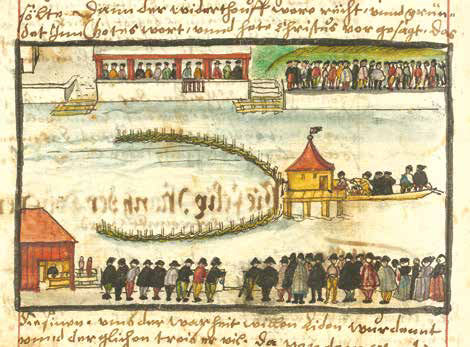
Felix Manz–Anabaptist Martyr Triage is a necessity in the medical world and is often a matter of life and death. In the world of theology it can also mean spiritual or physical life and death. In the last post on this topic, we considered the importance of fleshing out the brilliant statement by Rupert Meldinius in the 17th Century about church cooperation. He wrote, “In essentials, unity; in nonessentials, liberty; in all things, charity.”1 His statement invokes the need to think about theology in prioritized categories. Gavin Ortlund and Al Mohler prescribe several ways to rank theology. Both Mohler and Ortlund have similar categories for one to three, while Ortlund adds a fourth. They both encourage us to think of processing theology in terms of primary, secondary, and tertiary issues. Ortlund adds a fourth category, which he refers to as adiaphora or “indifference”.
In review, primary doctrines are essential to the Gospel. Secondary doctrines are essential to the health of an individual church or denomination, but not directly to the integrity of Gospel. Third rank doctrines are still important to portions of theology, but should not divide believers. Finally, fourth rank doctrines adiaphora are unimportant to the gospel altogether. These are convictions born of preference and opinion.
The focus in this post is to consider how theological triage can be compromised, misapplied, and resolved historically in the church. For the past 2000 years, the church has relied upon Church Councils, Creeds, and Confession Statements to apply triage and maintain unity. Additionally, certain writings of believers have clarified primary and secondary issues. However, there was still much confusion over how to apply these categories in church history. Sometimes the misapplication resulted in exile and death.
In the first eight centuries of the church there were seven ecumenical councils. They began in 325 with the First Council of Nicaea and ended in 787 with the Second Council of Nicaea. These councils were formed to root out error and maintain first-rank theological concerns. For example, in the First Council of Nicaea in 325, Arius, a priest from Alexandria, was teaching that Jesus was created by the Father. He believed and taught that the Father was greater than the Son. Alexander of Alexandria argued that Jesus was begotten of the Father, not created and was fully equal with the Father. The council agreed with Alexander and the divinity of Jesus was preserved in the local church. 2 In this case, theological triage prevailed and preserved. The Council sided with the orthodox, composing the first form of what would become known as the Nicene Creed. 3Throughout the next few centuries a pattern arose with a false-teaching proclaimed, a church council formed to address it, and an orthodox conclusion reached to maintain first-rank theological issues. Some had to do with the humanity of Christ and others the Divinity of the Holy Spirit.
Another way that theological triage sustained the church was by the use of explicit creeds and confessions. Archibald Alexander defines a creed as “the systematic statement of religious faith; and by the creeds of the Christian church we mean the formal expression of “the faith which was delivered unto the saints.”4 The most well known of the Creeds are the Apostles Creed and the Nicene Creed. The Apostles Creed is the most well known of Creeds and is often referred to as the Creed of Creeds. 5 The creed represents apostolic gospel teaching in summary form. For example, The Apostle’s Creed has a wonderful statement about the Trinity, which should always remain a first-rank theological issue essential to the gospel.
The Church and its leaders do not always get theological triage correct. In fact, even when they do see sort out primary from secondary, they sometimes misapply their convictions overzealously and violently. Mode of Baptism in the 16th century was example of this confusion and chaos. As we have alluded in the last post, a specific mode of baptism is often considered to be a secondary issue in theological triage. However, during the time of the anabaptist it was first-rank theological issue. The question was not whether or not to be baptized, it was the timing and mode of baptism. It is hard for us to imagine religious leaders so dug into baptism that they were willing to physically punish those who disagreed by killing them. However, that was the position of the Roman Catholic Church and many protestant believers in the 16th Century. Ulrich Zwingli, a contemporary of Martin Luther, was pro-reformation, but not as radical as some of the anabaptists in his attempts to revitalize the doctrine of paedobaptism. Felix Manz, was a friend of Zwingli’s, but the two could not agree on baptism. W.S. Reid explains the tension between the two men. He writes:
Manz, however, came to reject Zwingli’s view that the ultimate authority in any reform movement must be the civil authorities, and he did not accept the other reformers’ distinction between the “visible” and the “invisible” church—i.e., those who professed faith and those who truly did believe. He believed that the church must be made up of only those who have true faith in Jesus Christ as Savior. Therefore, he denied the right of infants to baptism. 6
This was a struggle for Zwingli and those he considered his brothers. Christian History Magazine summarizes the tension he felt.
Zwingli apparently felt the choice was between orderly change and ecclesiastic anarchy. He urged moderation and patience and engaged the radicals in a series of public debates, but when the radicals began re-baptizing in February, 1525, he sided with the Council in its decision to outlaw private meetings and require that all children be baptized. 7
The final day for the first anabaptist martyr came on a cold day in 1527. The Roman Catholic Church passed a verdict of guilty upon Felix Manz, and sentenced him to death by drowning the River Limmit. Zwingli was silent and did not oppose his sentence or punishment.
Meldinius’ statement emerges from the depths of the ice River Limmit. “In essentials, unity; in nonessentials, liberty; in all things, charity.” In Felix Manz’ case, there was no liberty and charity. In our theological triage, we must hold our convictions firmly and with grace toward those who disagree; especially on secondary matters.
- https://www.ligonier.org/learn/articles/essentials-unity-non-essentials-liberty-all-things/ ↩
- https://www.challies.com/articles/7-councils-the-first-council-of-nicaea/ ↩
- Brett Scott Provance, Pocket Dictionary of Liturgy & Worship, The IVP Pocket Reference Series (Downers Grove, IL: IVP Academic, 2009), 43. ↩
- Arch. B. D. Alexander, “Creed, Creeds,” ed. James Orr et al., The International Standard Bible Encyclopaedia (Chicago: The Howard-Severance Company, 1915), 741. ↩
- https://www.thegospelcoalition.org/article/9-things-know-apostles-creed/ ↩
- W.S. Reid, “Manz, Felix,” ed. J.D. Douglas and Philip W. Comfort, Who’s Who in Christian History (Wheaton, IL: Tyndale House, 1992), 451. ↩
- “A Gallery of Family, Friends, Foes, and Followers,” Christian History Magazine-Issue 4: Zwingli: Father of the Swiss Reformation (Worcester, PA: Christian History Institute, 1984). ↩
-
Triage and Cooperation in the Local Church (Part I)
In 1627, German Lutheran Theologian Rupertus Meldenius penned a tract on Christian Unity. In it, he writes, “In essentials, unity; in nonessentials, liberty; in all things, charity.”1 These words provide a framework for how believers respond to one another when we disagree. Meldinius’ words echo the Scriptures, calling believers to maintain unity over primary matters and not quarrel over secondary issues. Our temptation is to believe that all doctrines are of equal weight and significance. Doctrinal distinctions can be applied as one would engage in the practice of triage.
The origin of the word “triage” is French and means “to sort.” 2 The definition of the word is as follows: the sorting and allocation of treatment to patients, especially battle and disaster victims, according to a system of priorities designed to maximize the number of survivors. The sorting of patients (as in an emergency room) according to the urgency of their need for care 3 When applied to theology in the local church in relation to cooperation in the kingdom of God, it addresses what we should prioritize in gospel ministry. In his article, “A Call for Theological Triage and Christian Maturity, Al Mohler links the idea of medical triage to theological triage. He writes, “The same discipline that brings order to the hectic arena of the Emergency Room can also offer great assistance to Christians defending truth in the present age…A discipline of theological triage would require Christians to determine a scale of theological urgency corresponding to the medical world’s framework for medical priority.” 4
It is essential to develop a framework to filter theological issues. Al Mohler and Gavin Ortlund define at least four categories that help us understand theological triage. In other words, when an issue is presented to us, we must decide which category it fits into.
The first category, is regarded a primary category for first rank issues. These are doctrines considered essential to the gospel. They are worth fighting for because the integrity of the faith could be compromised if they are breached. Many consider doctrine in these categories to be fault-line beliefs. They mark a solid line between orthodoxy and non-orthodox belief systems. Some doctrines that are first rank are as follows: Substitutionary atonement, Trinity, the deity of Christ, the humanity of Christ, the authority of Scripture, and justification by faith. These are examples of first-rank doctrines that must be defended and maintained to establish clarity of the gospel. Cooperation with other believers and fellowship with local churches holding first-rank doctrine is essential to Kingdom work.
The second category is reserved for secondary theological matters. Gavin Ortlund describes these as, “Doctrines that are urgent for the health and practice of the church, such that Christians commonly divide denominationally over them…”5 Believers may be divided into local assemblies or denominations by these differences. Some examples of secondary doctrine could be Church Governance, the Role of Women in Ministry, modes of Baptism, or approaches to communion. The exercise of the difference in secondary matters does lead to each local church worshipping differently. Cooperation between believers is vital at this level. Churches can still do many things together, even though they will do church differently. For example, churches can participate in area-wide revivals that hold to the same primary doctrines but may have difficulty with a joint class on baptism or church membership.
The third category is tertiary. These are matters two times removed from what is essential to the gospel’s integrity. They are less significant than the secondary matters of theological agreement. For example, in Category 1, the authority of the Scriptures is an essential or first-rank issue. We must defend the inerrancy of Scripture at all costs. However, in this third category, the way we view the specifics of the Book of Revelation is tertiary. Believers can disagree on views of the tribulation and millennium while still going to the same church and remaining in close fellowship with one another.
The last category is called the adiaphora category. This is a word which means “things indifferent.”6 These are practices that are neither commanded nor forbidden in Scriptures. An example of a fourth-rank issue is the musical instrumentation in a worship service. These may be relevant and intellectually stimulating, but not theologically important.
These categories can act as filters to theological triage and cooperation frameworks. Not every hill is a hill to die on, but some are worth the struggle.
- https://www.ligonier.org/learn/articles/essentials-unity-non-essentials-liberty-all-things/ ↩
- https://www.dictionary.com/browse/triage ↩
- https://www.merriam-webster.com/dictionary/triage ↩
- https://albertmohler.com/2004/05/20/a-call-for-theological-triage-and-christian-maturity-2 ↩
- Gavin Ortlund, Finding the Right Hills to Die On (The Gospel Coalition) (pp. 12-14). Crossway. Kindle Edition. ↩
- Gavin Ortlund. Finding the Right Hills to Die On (The Gospel Coalition) (pp. 19-20). Crossway. Kindle Edition. ↩
-
The Before, During, and After of Listening Well to a Sermon

If you listen to sermons for 40 years, you will have heard about 1600 Bible messages. I assume you will attend an average of 40 Sunday mornings a year and not 52, as few have perfect attendance. However, even if you attend 52 worship services yearly, you will have sat through 2,080 sermons in 40 years. As the son of a Baptist preacher, I sat through many sermons as a child and youth. Now, as a Pastor, I have preached roughly 500 Sunday morning sermons since I began my journey preparing and delivering Bible messages in 2002. In my time listening to and preaching sermons, I have learned much and grown in my faith due to the sermons I have heard and those I have prepared.
As we consider sermons and their centrality in our lives, I find it essential to slow down and consider how we listen to them. After all, if we listen to thousands of sermons and give thousands of hours to hear, perhaps we should consider the art of listening to a sermon. I believe there is great value in pondering how to leverage the message to gain and retain spiritual growth.
In this blog post, I have tried to compile a list of practical tips from various authors and sources to aid you in listening well to sermons. I recognize that some who read this will be preparers and deliverers of lessons, and others will be listeners and applicants of those messages. However, I think it is wise for every preacher to be a preparer and listener of sermons, including his own.
I have divided this post into three sections. Each section will include helpful tips followed by the source I gleaned them from. I hope this is helpful to you.
Before a sermon, do this…
- Prepare your whole soul (rested body, an alert mind, receptive spirit) for the sermon ahead. (Ryken)
- Protect your Saturday evening and Sunday morning routines so that you can be physically rested and mentally alert. (Lifeway Research)
- Deal with known sin in your life by asking God to reveal sin, listening to the Spirit within, and confessing it to God. (Lawless)
- Pray for the Preacher (Lawless)
- Arrive early so that you can prepare yourself for worship and preaching (Lifeway Research)
- Remove Distractions
-Put away your phone or turn off notifications. (Lawless)
-Ask God to help you hear the Word in the Sermon. (Lawless)
The preparation of the listener is as essential as preparing is for the deliverer of the sermon. This preparation should not be compartmentalized to the spiritual but also the physical. After all, how can you participate in worship if your mind is weary and your eyelids are heavy from a lack of sleep? The spiritual preparation of the heart is essential for the hearer of sermons. The confession of sin before the worship service is critical to removing the debris from the ear of one’s soul. If we want to hear, we must confess our sins and lay aside every weight and distraction to crisply hear the proclaimed Word. You may also include a prayer time for the preacher delivering the message. During many weeks, he and his family face an onslaught of trials and temptations as he prepares the Word for your soul. On the morning of the worship service, it is essential to arrive a bit early for the service. Getting settled in seems trivial, but it is necessary if you are to be focused when the service begins. As the service starts and just before the sermon, consider offering a breath prayer to God, “Father, I come to you in the name of Jesus and in the power of the Spirit to ask you to help me to hear your Word today and apply it to my life.”
During the Sermon, do this…
- Expect God to Speak to you through His Word during the message. (Ash)
- Pray for the Holy Spirit to Open your eyes and give you a willing heart to respond to his call. (Lifeway Research)
- Hear the sermon in church week by week (Lawless)
- Take notes on the message. (Lawless)
- Copy the Outline and record the key ideas of the text/sermon (Jenkins)
- Follow along as the Pastor teachers (Acts 17:11/Berean Examples)
- Listen for at least one nugget of truth and application for your life (Lawless)
- Think beyond the moment of the sermon as to what God could do in you and through you if you surrendered wholeheartedly to the truth you are hearing (Lifeway Research)
We should come to worship anticipating the Word of God proclaimed on Sunday morning. Prayer during the worship service and just before preaching is essential to secure a proper focus and a soft heart for God’s Word. Note-taking is also important but it should not be a distraction from the truth being proclaimed. The importance of following along in the Scriptures and thinking in terms of application is essential to the listener. Dr. Chuck Lawless stresses the importance of being at church week-by-week to hear the sermon in person. There may be exceptions to this, such as short-term travel or health concerns, but overall, regular attendance is the best-case scenario for the healthy believer. To hear a sermon preached in the assembly emphasizes accountability to the same truth be heard by all. In-person attendance also unites us as we hear the Gospel proclaimed together.
After a Sermon, do this…
- Do what the Bible says (Ash).
- Write down one or more action steps to take after hearing the sermon (Lawless).
- Review the text and notes before going to bed on Sunday Night. (Lifeway Research).
- Retell the sermon in a Sunday journal or over coffee with a friend. (Lifeway Research)
We should be committed to obeying the Word of God before, during, and after the sermon is proclaimed. The importance of reviewing notes or even listening again to the sermon is important. A Sunday evening post-sermon journal may be an excellent idea. A Monday morning or afternoon coffee conversation about the message may also be extremely beneficial to your growth in Christ. It always amazes me how two people can hear the same truth proclaimed, and listening to the Holy Spirit, apply it differently to their lives.
Resources for Becoming a Better Sermon Listener
Articles
- “How to Listen to A Sermon?” by Chuck Lawless
- “How to Listen to a Sermon?” Lifeway Research
- “Seven Ways to Become a Better Sermon Listener” by Christopher Ash
- “How to Listen to a Sermon?” Leland Ryken
- “Lessons in Becoming a Better Listener” by Tim Challies
- “What makes a sermon difficult to listen to? By Tim Challies
- “Becoming a Better Listener” by Tim Challies
- “Three Keys to Listening to a Sermon” by Dave Jenkins
- How to Listen to a Sermon George Whitfield
Books
- Listen Up: A Practical Guide to Listening to Sermon by Christopher Ash
- . Helping Johnny Listen: Taking Full Advantage of the Sermons We Hear by Thadeus L. Bergmeier
- Expository Listening: A Practical Guide for Hearing and Doing God’s Word by Ken Ramey
- Preaching by Ear: Speaking God’s Truth from the Inside Out by Dave and Karen McClellan
- Just say the Words By Robert Jacks
- Rewiring Your Preaching: How the Brain Processes Sermons by Richard H. Cox.
-
The Archipelago Kingdom of God

Malaysia is one of the largest archipelago nations in the world. There are 879 islands in the country. The largest of these, Pulua Banggi, is 440 square Kilometers. The smallest is “Little Bakkungaan,” which is .085 square kilometers. Penang Island is the most densely populated island, with 794,313 people living on 114 square miles. The least populated is Kuruman Island, with 13,057 people living on just under one square mile. Among these islands, there are 137 living languages spoken.
Overall, the nation is governed by 13 states and 3 federal territories. Each state has its own written constitution, legislative assembly, and executive council, which are responsible for the legislative assembly and are headed by a chief minister. The government has three branches (much like the U.S.)—executive, legislature, and judiciary. Additionally, a federal court system operates uniformly throughout the country.[1]
You may be asking why I am writing about Malaysia. Why emphasize the island sizes and populations? Why consider the unifying governmental structures? The answer is that Malaysia, as an archipelago country, is a great picture of the Kingdom of God on earth. The body of Christ is made up of countless independent and yet interdependent local churches. These are connected by the blood of Jesus and the unifying power of the Holy Spirit. They are ruled by King Jesus and led by under-shepherds who facilitate a Great Commission.
As church leaders, we must embrace a Kingdom vision that extends beyond our local church. We must consider the advantages of cooperation and coalition as we carry out the Great Commission together and advance the Gospel throughout the land. In this article, I would like to share four characteristics of God’s Archipelago Kingdom and four ways to apply them in your local church context.
The first characteristic we must consider is that God’s archipelago Kingdom is ruled by a Sovereign Savior King. Jesus has been given the right to rule because of his death, burial, resurrection, and ascension (Matt. 28:19). He has authority over every local church that spreads across the globe. Jesus is indeed the unifying King of every island church and nation. It is essential for a Pastor to have this kind of Kingdom outlook. In his book, The Kingdom Minded Pastor, Joel Littlefield writes, “A kingdom vision begins with believing and knowing that Christ is the King. The Kingdom of Heaven has come to this earth in the person and work of Jesus. Having a kingdom vision means that we are confident in the authority and Kingship of Jesus in this world, over the universe, and over our ministries. It’s being confident in the success of our mission because of our confidence in our King, Jesus.”[2]
The second characteristic has to do with the unifying purpose of the Kingdom’s mission. The King has made it clear to all archipelago saints that they are to share the Gospel (Acts 1:8) and make disciples of all nations (Matt. 28:19-20). The result is that the archipelago kingdom is diverse in nature, even though the mission of its citizens remains the same. In the BFM 2000, under section XIV—Cooperation, it reinforces this notion. It reads, “Christ’s people should, as occasion requires, organize such associations and conventions as may best secure cooperation for the great objects of the Kingdom of God. Such organizations have no authority over one another or over the churches.”
The third characteristic answers the question of who will lead these churches to carry out the Kingdom initiatives given by the Archipelago King. The Scriptures tell us they are to be led, fed, guided, and protected by a coalition of Under-Shepherds (I Peter 5:1-5). These are Holy Spirit-called men who are Scripturally qualified to preach the Word (I Tim. 3:1-7), shepherd the flock (I Peter 5:1-5), and defend against enemies (Acts 20:27-30). The most significant impact of these Pastors happens when they work together in a “coalition” to accomplish their God-given task. A coalition is very important to such archipelago shepherds. Pastors should consider working together with other Pastors to guide and protect their flocks. Joe Littleton writes, “A [Gospel-Centered] coalition is an alliance for joint action. There are pastors in your city or town that you can partner with. Intentional kingdom-minded relationships will, Lord willing, result in healthier pastors, healthier local churches, and kingdom multiplication.”
Some Pastors tend to isolate and only focus on their island to the neglect of the greater Kingdom. The Biblical picture, as portrayed in the early church, did not operate in this way. In the IX Marks Journal, Jonathon Leeman answers the question, What is the relationship between your local church and every other church in the world? He asks, “Does your church cooperate with other local churches in evangelism and missions, in discipline, in counseling, in mercy ministry, in prayer?”[3] He argues that the early church included other churches in there greetings (Rom. 16:16; I Cor. 16:9; II Cor. 13:13; Eph. 4:22), shared preachers and missionaries (II Cor. 8:18; 3 John 5-6a), supported one another financially with joy and thanksgiving (Acts 15:25-26; II Cor. 9:12; II Cor. 8:1-2), imitated one another in how to live the Christian life (I Thess. 1:7; 2:14), and were exhorted to pray for other churches (Eph. 6:18). He concludes, “But wherever you come down on the question of authority between churches, it is important to recognize that our local congregations should in some measure be integrated with one another. And your church will best fulfill the Great Commission when its life is connected in relationship and awareness with other churches.”
Finally, the last characteristic of God’s Archipelago Kingdom is that it is “glocal” and “diverse.”The Oxford Language Dictionary defines this glocal as, “reflecting or characterized by local and global considerations.”[4] This means the Kingdom of God includes but is not limited to Augusta County, VA, and the Shenandoah Valley. The church is not located in the same place or region but is everywhere. Additionally, the church consists of both large and small gatherings. In these gatherings, people will look different, dress in great variations, and speak any number of languages. God is building his Archipelago Kingdom so that someday, every tribe and tongue will gather and worship him (Rev. 7:9).
How can you practically live out your role as a Kingdom-Oriented Archipelago Pastor?
- Embrace a Kingdom-Vision of Coalition with other Brother-Pastors
- Regularly Attend a gathering of Pastors in 2025. (SBCV/Valley Shepherds).
- Partner with another Church to do Gospel-Work in your Community.
- Engage another brother-pastor for regular coffee and conversation.
John Donne[5]
“No man is an island
Entire of itself
Every man is a piece of the continent
A part of the main.”
Pastoral Resources on Cooperation and Coalition
The Kingdom Minded Pastor: How Partnerships Advances the Kingdom by Joel Littlefield
Finding the Right Hills to Die On: The Case for Theological Triage by Gavin Ortlund
Uncommon Unity: Wisdom for the Church in an Age of Division by Richard Lints
Church and Churches: IX Marks Journal, May-June 2013 by Jonathon Leeman
[1] https://2009-2017.state.gov/outofdate/bgn/malaysia/51664.htm
[2] Joel Littlefield, The Kingdom–Minded Pastor: How Pastoral Partnership Advances the Kingdom (p. 26). Christian Focus Publications. Kindle Edition.
[3] Jonathon Leeman, “Church Cooperation”, IX Marks Journal, 2013.
[4] https://www.oed.com/dictionary/glocal_adj?tab=meaning_and_use
-
Small Town Rural Church = Eternal Significance (Part 2)

I was recently on a panel and asked many questions about my experiences as a small-town rural church (STRC) Pastor. Two questions seemed to rise above the others, and I want to address these questions in this post in hope that they will encourage other brother-pastors in similar situations.
The first question is, what did you enjoy the most about STRC ministry? There are at least two joys to share.
I enjoyed the unique relational intimacy with church members and the community. Everybody knew everybody, and that was both a blessing and a curse, but mostly a blessing. The church service almost always carried over into a local eatery or a church member’s home. My best memories with members occurred over a great meal or sitting on the back porch drinking tea. These are the people I loved, pastored, and preached to each week. I knew the names of their kids and the complex issues they were facing. For some, I married them, and for others, I buried their loved ones. When I stood before them each week, I was not a stranger but their Pastor. It was a grace gift from the Almighty to shepherd them.
I loved preaching to the people I pastored so intimately. As I prepared a message, names, and faces came to mind, and community blessings and tragedies were near my heart. Even illustrations regarding members gone on into heaven, local histories, and regional landmarks knit their way into the message.
The second question that stood out to me on the panel is, what would you do differently if you could do it all over again? I have much to share on this, but I will limit it to three things.
First, I would have clarified (in my theology) the definition of ministry success in STRC much sooner. For a time, I was consumed with growing the church spiritually and numerically and often not content with discipling those in front of me. I later learned that faithfulness that leads to fruitfulness is the metric of success. I confess I was trying to make the church into something it would not be; a large suburban church.
Second, I would do less event programming and focus more on relational discipleship, developing small groups, and nurturing/mentoring leaders. Too often, I tried to do too much on my own and, at times, put my family and church under undue stress during certain seasons. As I think back, I would have engaged members more relationally and intentionally to help them grow as disciples of Jesus. In particular, I would have spent more time developing those who could help me carry out the vision and mission of the church instead of going it alone so much.
Third, I would have created and developed a Men’s Discipleship Ministry. I believe that if there is one thing that works well in STRC ministry, it is reaching and ministering to men. It is hard to explain, but STR men really enjoy connecting over a fire, bbq, cornhole, skeet shooting, or any number of hobbies. In my experience, they will make time for church or community gatherings, which seems to be in their DNA. Pastors have a unique role in initiating such ministry and outreach. There are fertile fields and spiritual fruit ripe for picking in this area of STRC.
Resources
Liberating Ministry from the Success Syndrome by Kent Hughes
Noble Warriors Ministry (These guys helped me develop a biblical and strategic plan to reach men.)
Mobilizing Men for One-on-One Ministry by Steve Sonderman
How to Build a Life-Changing Men’s Ministry by Steve Sonderman
The Mentoring Church: How Pastors and Congregations Cultivate Leaders by Phil A. Newton
-
Subscribe
Subscribed
Have a WordPress.com account? Log in now.

