-
Intentionally Developing Leaders in the Local Church

How can one pastor figure all that out and do the necessary work? I must confess that I often forget that I am one person with finite limitations. The tension only builds as we consider our roles and responsibilities at home, in the community, to our denomination, and to the Kingdom of God in our region.
Many questions arise out of this tense reality. First, do we have enough mature leaders to nurture current and potential disciples? Second, do we have an intentional plan to develop church leaders? Finally, what will happen if we do not have enough leaders and have no deliberate plan to develop them in our local churches?
During this time I want you to prayerfully consider how you can intentionally raise up mature disciples of Jesus who can lead others in your local church. When we unpack this challenge, it begins by examining your current leadership structures for biblical clarity and organizational alignment. The next step is creating a clearly defined pathway to express this clarity and alignment and to develop mature spiritual leaders. These future mature leaders could be described as a Pastor/Elder, Associate Pastor, Deacon, Ministry Leader/Director, Church Staff, Small Group Leader, Missionary, or Church Planter. There is an old saying that is applicable, “If you fail to plan, you plan to fail.” I encourage you to prayerfully consider meeting with your church leaders to develop a plan. It will benefit your longevity in ministry and the health of your church and give assurance to the next generation of leaders.
Many churches have implemented an intentional Ministry Residency Program to help raise leaders to serve in their church and be sent out into greater Kingdom work. Some are highly structured, and others are more informal. In a sense, every residency must uniquely express the church leadership and local ministry context. In other words, pastors should not try to carbon-copy other Residency Programs but should strive to prayerfully and collaboratively develop their own.
I have sought to provide you with resources that can help you discover and implement Leadership Pathways/Pipelines and initiate General Ministry Residency Programs.
Resources on Leadership Pathways/Pipelines and Church Residency
Books
- How to Start a Residency? By Clint Clifton (Free E-Book)
- Designed to Lead: The Church and Leadership Development by Eric Geiger
- Building Leaders: Blueprints for Developing Leaders at Every Level of Your Church by Aubrey Malphurs and Will Mancini
- The Multiplication Effect: Building a Leadership Pipeline that Solves Your Leadership Shortage by Mac Lake
Article
- “Our Pastoral Residency Program Reading List” by Jarrid Wilson of the Gospel Coalition
- 7 Crucial Components of a Church Residency Program by Vanderbloemen
- Ten Steps to Launching a Residency in Your Church: North American Mission Board
- What is a Leadership Pipeline by Todd Adkins
- Why You Need a Leadership Pipeline in Your Church? By Mark Warnock
- How to Build a Leadership Pipeline in Your Church by Brandon Kelley
Media
- Leadership Pipeline Training by Lifeway’s Ministry Grid (This is a Paid Service)
- Starting Residencies: North American Mission Board (Youtube)
- Starting a Church Planting Residency by Bill Elliff (Youtube)
Other
-
Come Away and Rest A While: What Pastors Can Learn from Jesus’ Pattern of Withdrawal (Part 5)
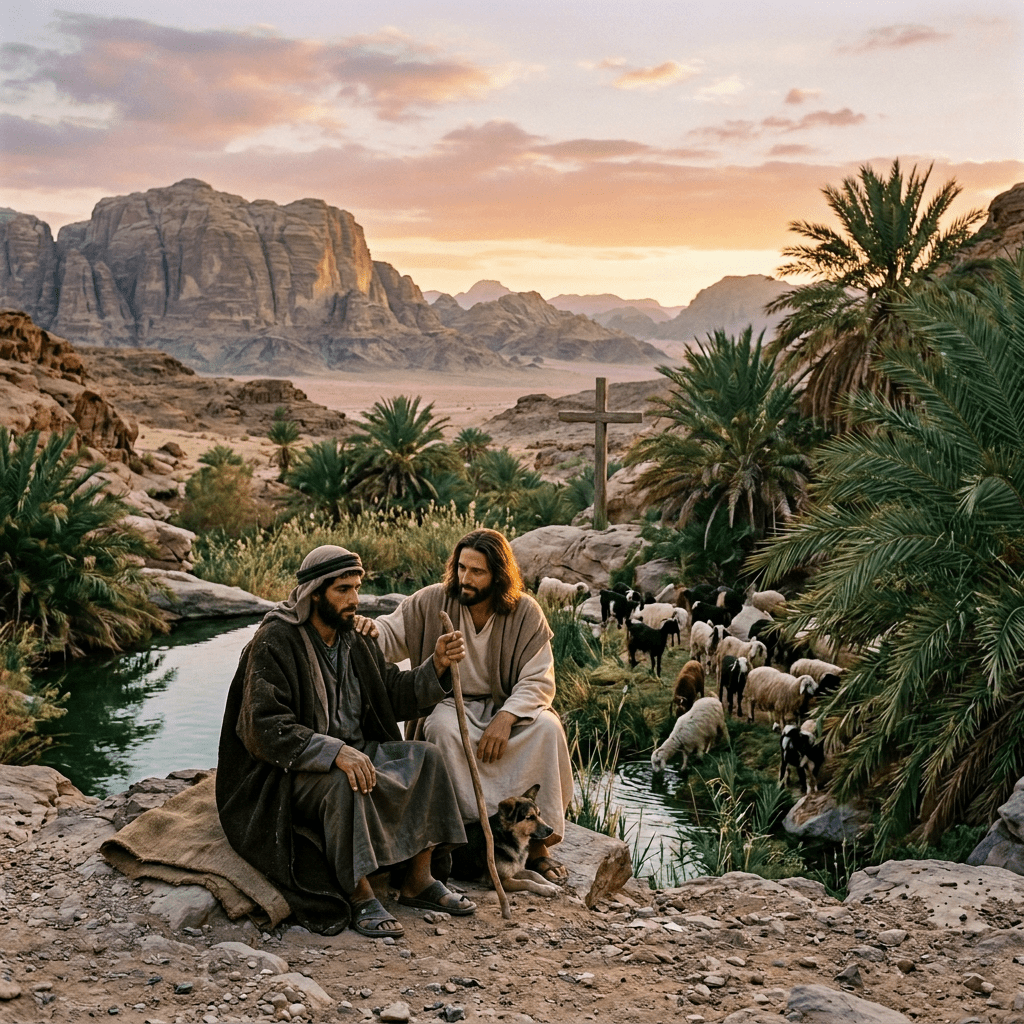
Mark 6:31 “Come away by yourselves to a desolate place and rest a while.”
Pastors sometimes assume withdrawal is what faithful people do only after ministry ends. Jesus’ life tells a different story. Jesus withdrew in the middle of ministry—not because the mission was unimportant, but because communion with the Father was essential to the mission.
Mark 1:35 gives one of the clearest examples. After an intense evening of healing and ministry, Jesus rose early, went to a desolate place, and prayed. James Edwards notes that Mark records Jesus praying at three strategically significant moments: early in the Galilean ministry, after feeding the five thousand, and in Gethsemane. Each occurs in solitude and under pressure.1
Luke 5:15–16 makes the pattern even clearer. As Jesus’ reputation spread and crowds gathered to hear him and seek healing, “he would withdraw to desolate places and pray.” Increased demand did not eliminate withdrawal. If anything, the growth of ministry made communion with the Father more necessary.2
Siang-Yang Tan emphasizes the intentionality of this practice. Jesus deliberately stepped away from people in order to pray in solitude. That is an important correction for pastors who interpret every open space in the calendar as an opportunity to do more ministry.2
The forty days in the wilderness in Matthew 4 represent a different kind of withdrawal—extended, testing, preparatory, and Spirit-led. This was not a vacation. Yet it still demonstrates that significant seasons of ministry can be preceded by significant seasons of solitude, prayer, fasting, and dependence on the Word of God.3
Then Jesus explicitly invites the disciples into the same rhythm. After they return from itinerant ministry in Mark 6, he tells them to come away and rest. Collins and Attridge observe that the wording echoes Jesus’ own earlier withdrawal and suggests a time of rest and likely prayer after intense preaching, healing, and ministry activity.4
This pattern has immediate pastoral application. After a demanding Sunday, funeral week, revival, conflict, construction project, crisis season, or stretch of hospital ministry, pastors should not assume the only faithful response is to keep pressing. There are times when the Christlike response is to withdraw.
Withdrawal does not require disappearing for a month. It can take the form of a quiet morning before the phone begins, a half-day prayer retreat, a recurring day away from church property, or a brief overnight retreat for Scripture, prayer, walking, and sleep. The essential movement is away from demand and toward the Father.
The pastoral temptation is to believe the needs of people justify the neglect of the pastor’s own soul. Jesus never modeled that logic. He loved people perfectly, and he still withdrew. He was accessible, and he still sought solitude. He carried the mission of redemption, and he still prayed.
Pastors do not need to apologize for following Jesus’ pattern. There is wisdom in hearing Christ’s invitation not only as words spoken to the Twelve, but as a pattern for all who spend themselves in ministry: come away, be with the Lord, and rest a while.
Sources for This Post
1. James R. Edwards, The Gospel according to Mark, Pillar New Testament Commentary (Grand Rapids: Eerdmans, 2002), 65–66.
2. Siang-Yang Tan, Rest: Experiencing God’s Peace in a Restless World (Vancouver, BC: Regent College Publishing, 2003), 63–65.
3. D. A. Carson, “Matthew,” in The Expositor’s Bible Commentary, vol. 8 (Grand Rapids: Zondervan, 1984), 112.
4. Adela Yarbro Collins and Harold W. Attridge, Mark: A Commentary on the Gospel of Mark, Hermeneia (Minneapolis: Fortress Press, 2007), 318.
-
Jesus is Our Rest: Why the Deepest Renewal a Pastor Needs Cannot be Found Merely in a Day Off (Part 4)
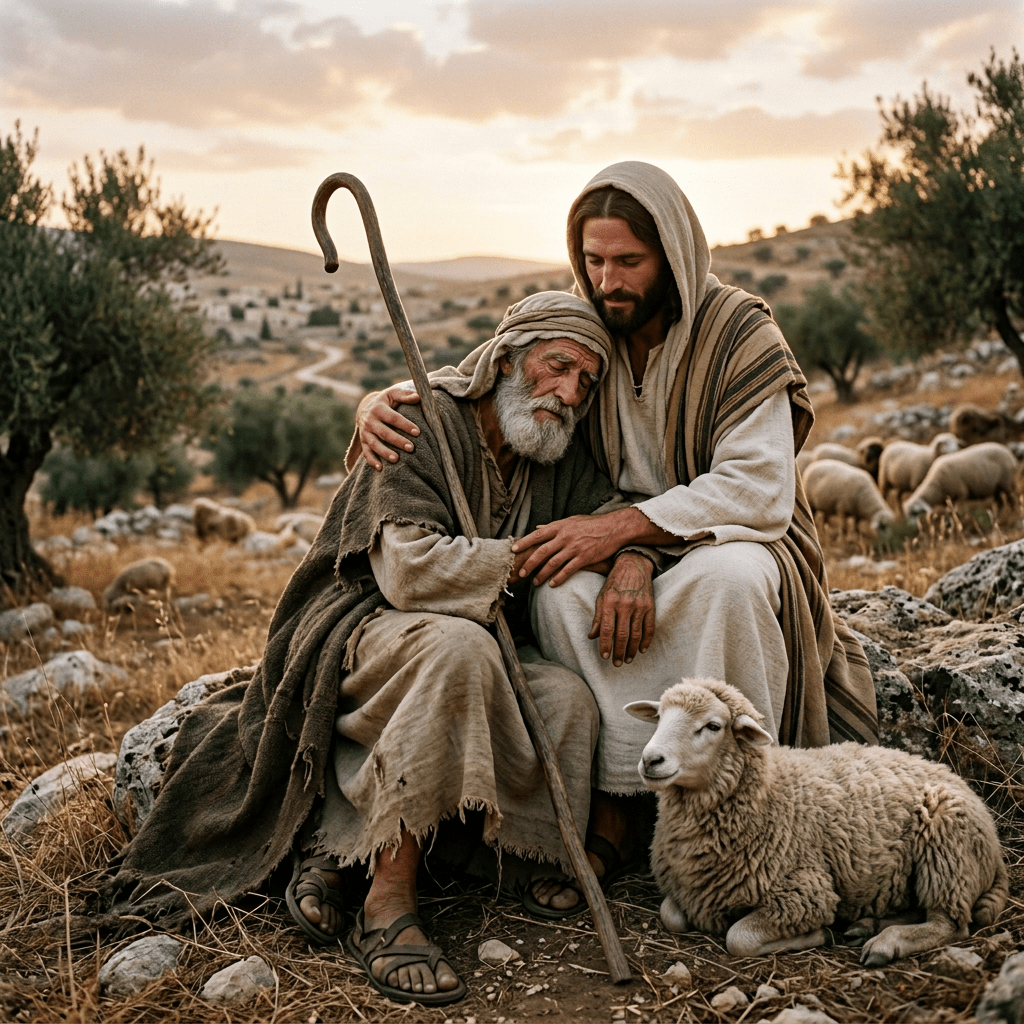
In Matt. 11:28-29 Jesus said, “Come to me, all who labor and are heavy laden, and I will give you rest.”
A pastor can take a day off and still remain restless. He can leave town and carry the church with him in his head. He can sleep longer and still wake up anxious. That is why biblical renewal cannot stop with the calendar. The deepest rest Scripture offers is ultimately found in a person.
Dr. Scott Hildreth and Dr. Steven McKinion make the point directly: “Sabbath is not only a day; in its fullest sense it points to Christ, who is our rest.” Siang-Yang Tan similarly describes Jesus as “the source of true rest and shalom.”
The Old Testament word “Shalom” communicates more than the absence of conflict. It carries the ideas of wholeness, soundness, welfare, peace, and life rightly ordered before God. The New Testament word “Eirēnē” carries a related range of meaning, including peace, reconciliation, harmony, and the saving well-being secured through Christ.
That gives Matthew 11:28–30 particular significance for tired pastors. Jesus does not first say, “Organize your schedule better.” He says, “Come to me.” The Greek verb translated “give you rest” carries the sense of refreshing or causing someone to cease from labor. The center of the invitation is relational: take Christ’s yoke, learn from him, and discover rest for the soul.
This does not mean Jesus calls his disciples to an undemanding life. Craig Keener notes that Jesus’ yoke is not light because he requires nothing, but because he is a Master who cares for those who belong to him. The pastoral life remains costly, but the pastor does not carry it alone.
The foundation for this rest is reconciliation with God. Romans 5:1 says that those justified by faith have peace with God through Jesus Christ. Ephesians 2 goes even further: Christ “is our peace.” Before pastors are shepherds, leaders, preachers, counselors, or administrators, they are people who have been brought near to God by grace.
Hebrews 4 widens the horizon again. Believers have entered God’s rest through faith, are called to live in the present reality of trusting obedience, and await the final Sabbath rest that remains for the people of God. Pastoral rest, then, has an already-and-not-yet quality. We receive peace in Christ now while looking toward complete rest in the age to come.
This perspective guards us from turning Sabbath into another technique for productivity. The purpose of rest is not simply to make the pastor more efficient on Monday. It is to help him live as a beloved disciple who receives life from Christ rather than trying to manufacture spiritual strength through constant effort.
A day off can restore the body. A vacation can create distance. A sabbatical can open space. But only Jesus can give the soul the shalom for which it was made. Sustainable pastoral ministry begins with returning, again and again, to him.
Sources for This Post
1. D. Scott Hildreth and Steven A. McKinion, Serving Jesus without Burning Out (Nashville: B&H, 2025), 129.
2. Siang-Yang Tan, Rest: Experiencing God’s Peace in a Restless World (Vancouver, BC: Regent College Publishing, 2003), 37, 44.
3. Cornelis Plantinga Jr., Not the Way It’s Supposed to Be: A Breviary of Sin (Grand Rapids, MI: Eerdmans, 1995), 10.
4. Ludwig Koehler and Walter Baumgartner, The Hebrew and Aramaic Lexicon of the Old Testament, vol. 4 (Leiden: Brill, 1994–2000), 1531–32.
5. Walter Bauer, A Greek-English Lexicon of the New Testament and Other Early Christian Literature, 3rd ed., ed. Frederick W. Danker (Chicago: University of Chicago Press, 2000), 287–88.
6. R. T. France, The Gospel of Matthew, NICNT (Grand Rapids: Eerdmans, 2007), 449–53.
7. Craig S. Keener, Matthew, IVP New Testament Commentary 1 (Downers Grove, IL: InterVarsity Press, 1997), 222.
8. Arnold G. Fruchtenbaum, The Messianic Jewish Epistles (Tustin, CA: Ariel Ministries, 2005), 56–57.
-
Sabbath: God’s Rhythm for People Who Cannot Do Everything (Part 3)
Recovering Rest, Worship, and Delight in a Culture of Constancy

The Bible’s first picture of rest appears before human sin, before the law of Moses, and before Israel existed as a nation. Genesis 2 describes God ceasing from his work on the seventh day, blessing that day, and setting it apart.1 The point is not that God was exhausted. His rest signaled completion, sovereignty, and delight in a finished creation.2
The Hebrew root behind Sabbath carries the basic idea of ceasing or stopping. That is important for pastors because our instinct is often to define rest by what we add: a hobby, a trip, entertainment, or exercise. Biblical Sabbath begins with something more basic: stop ordinary work.3
Wayne Muller observes that modern life has lost the rhythm between work and rest.4A. J. Swoboda makes a similar pastoral point: Sabbath is not merely leaving the office while continuing to mentally manage the work. Genuine rest requires some measure of emotional and mental disengagement from producing, planning, solving, and responding.5
The fourth commandment reinforces this creational pattern. Exodus 20 roots Sabbath in creation: God worked six days and rested on the seventh. Deuteronomy roots it in redemption: Israel was once enslaved in Egypt and must not return to a life where relentless labor defines existence. Mark Buchanan captures the difference memorably—Exodus looks back to Eden, while Deuteronomy looks back to Egypt.6
That distinction matters for pastors. Sabbath says at least two things to the shepherd’s soul. First, “You are not God.” The church belongs to Christ, and the world continues turning when the pastor stops working. Second, “You are not a slave.” The calling to ministry is not permission for endless availability and endless production.
Christians disagree over how the Old Testament Sabbath command relates to the Lord’s Day and the new covenant. The argument here is more modest: pastors who are not under Israel’s Sabbath legislation can still receive the wisdom of the creational rhythm. Six and one is a pattern worth recovering.7
Practically, that means protecting a regular day each week for worship, bodily rest, family, delight, and disengagement from routine ministerial tasks. Research shows that many pastors already try to do this, but rural and small-town pastors often struggle to maintain it.8 Lifeway reported that significant percentages of rural pastors find it difficult to take one day away, disengage from ministry, or relax and have fun.9
The challenge is not merely putting “day off” on the calendar. Sabbath requires a different posture. It asks the pastor to stop proving, producing, fixing, and responding long enough to remember that the church’s ultimate shepherd is Jesus.
For a pastor, a weekly Sabbath rhythm can become a regular act of faith: I have worked faithfully, but I am finite. God is still God. Christ is still Lord of his church. Today I will cease, worship, receive, enjoy, and trust.
Sources for This Post
1. Gordon J. Wenham, Genesis 1–15, Word Biblical Commentary 1 (Waco, TX: Word, 1987), 35–36.
2. K. A. Mathews, Genesis 1–11:26, New American Commentary 1A (Nashville: Broadman & Holman, 1996), 178.
3. Eugene E. Carpenter and Philip W. Comfort, Holman Treasury of Key Bible Words (Nashville: Broadman & Holman, 2000), 157.
4. Wayne Muller, Sabbath: Finding Rest, Renewal, and Delight in Our Busy Lives (New York: Bantam, 1999), 1.
5. A. J. Swoboda, Subversive Sabbath: The Surprising Power of Rest in a Nonstop World (Grand Rapids: Brazos Press, 2018), 19.
6. Mark Buchanan, The Rest of God: Restoring Your Soul by Restoring Sabbath (Nashville: Thomas Nelson, 2006), 87–88.
7. Douglas K. Stuart, Exodus, New American Commentary 2 (Nashville: Broadman & Holman, 2006), 457.
8. Lifeway Research, Pastor Attrition Study 2025 (Nashville, TN: Lifeway Research, 2025), 33–36.
9. Lifeway Research, 2025 Rural Churches Today Pastor Report, 10–11.
-
The Forgotten Shepherds of Small Places (Part 1)

Why small-town and rural pastors matter more than their visibility suggests!
When conversations about church leadership focus on large congregations, growing cities, and highly visible ministries, it is easy to overlook the thousands of pastors serving in communities that rarely make headlines. Yet small-town and rural churches are not peripheral to God’s mission. They are deeply woven into the religious landscape of the United States and the Southern Baptist Convention.
Glenn Daman has spent decades reminding the church that rural ministry is not a lesser calling. The pastor in a community of eighty people bears the same biblical responsibility to preach, disciple, shepherd, and lead as the pastor of a congregation of thousands. The difference is not the dignity of the calling but the context in which the calling is lived out.
The numbers reinforce the point. Research indicates that a substantial share of Southern Baptist congregations serve rural contexts, and that small churches represent a dominant portion of American congregational life. Hartford Institute research has likewise reported that half of U.S. congregations have sixty or fewer people in weekly worship, while perhaps three-quarters have one hundred or fewer.
Additionally, small churches contribute to Great Commission work in ways scale alone cannot measure. Rural congregations may report fewer baptisms than suburban or urban churches, but they are often remarkably stable. They maintain a gospel presence in communities where there may be few other evangelical churches, fewer institutional resources, and less population growth.
There is even a compelling Gospel reminder here: much of Jesus’ public ministry unfolded not in the great centers of the ancient world but among towns, villages, and rural communities. Daman and Jeffrey Clark note the Gospel writers’ repeated attention to these smaller places. The kingdom of God was proclaimed among ordinary people in ordinary communities.
That should reshape how we think about significance. Faithfulness in a small place is not small faithfulness. The value of a pastor’s ministry is not always determined by the size of their platform, attendance, budget, or visibility. A shepherd who knows his people, preaches Christ, baptizes converts, buries the dead, visits the sick, counsels families, and patiently disciples a community is obediently participating in the work of eternal consequence.
But the very closeness that makes rural ministry beautiful can also make it exhausting. The pastor is not simply a Sunday preacher. He is often a neighbor, chaplain, counselor, civic presence, crisis responder, and friend. In many congregations, he may also be the only paid minister—or he may hold another job during the week. That reality makes pastoral rest more than a lifestyle issue. It is a matter of stewardship.
The rest of this series will explore why sustainable ministry requires intentional rhythms of Sabbath, spiritual rest in Christ, purposeful withdrawal, and, where possible, extended seasons of sabbatical renewal. But it begins here: the pastors of small places matter, and their long-term health matters because the churches and communities they serve matter to God.
This 8 Post Series is adapted from a research paper written by Dr. Jamie McClanahan called “The Priority of Rest-Taking and Renewal Among Small Town Pastors”. It is intended to encourage and equip fellow pastors.
Sources for This Post
1. Aaron Earls, “Complicated Picture of Southern Baptist Churches Emerges from Statistical Analysis,” Lifeway Research, March 10, 2025.
2. Scott Thumma, “The Challenging Climate for US Congregations,” Faith Communities Today / Hartford Institute for Religion Research, February 11, 2020.
3. Glenn C. Daman, The Forgotten Church: Pursuing Growth in the Small Town Church (Chicago: Moody Publishers, 2002), 144.
4. Aaron Earls, “Small Churches Continue Growing—but in Number, not Size,” Lifeway Research, October 20, 2021.
5. Lifeway Research, “Southern Baptist Membership Decline Slows, Baptisms and Attendance Grow,” May 7, 2024.
6. “The Annual Church Profile Gauges Health of Denomination,” The Baptist Record, September 22, 2023.
7. Glenn C. Daman and Jeffrey A. Clark, The God of Small Places: Rediscovering the Importance of the Small-Town Church (Grand Rapids, MI: Kregel Ministry, 2022), 19, 142.
8. Darryl W. Stephens, Bivocational and Beyond: Educating for Thriving Multivocational Ministry (Lanham, MD: Rowman & Littlefield, 2022), 20.
-
The Significant Role of Small Town Rural Pastors (Part 2)
Small-town rural churches are significant because they contribute to Kingdom growth in many ways. First, they are giving to the CP. In 2023, SBC churches reported undesignated receipts of over $10 billion, up less than 1% from 2022, and mission expenditures through SBC avenues increased by 9% to nearly $800 million. Although they may contribute less than the overall percentage of larger churches, their giving is vital to the missions’ efforts of the SBC.[1]
Second, they are essential to the spiritual growth within the SBC. In 2024, SBC churches averaged 4.3 million in weekly worship attendance, a 6% increase from 2023 (approximately 4.06 million). Rural churches average 4.4 baptisms per congregation, compared to 8.5 in suburban and 15 in urban areas. Rural SBC churches, with 43% having fewer than 50 attendees and 27% having 50–99 attendees, constitute 70% of SBC churches with under 100 weekly attendees.[2] Although rural churches may not have as many baptisms as other-sized churches, they are still a stable force in the Great Commission. For example, in 2023, 73% of SBC churches had fewer than 100 weekly attendees (43% under 50, 27% between 50–99). Rural churches are the least likely to grow (16% reported growth from 2018–2023) but also the least likely to decline (35%), compared to urban churches (22% growth, 46% decline).[3]
Every contribution to the Kingdom of God is significant. The Small Town Rural Pastor is no exception. The Gospel impact an STRC can have on a community is transformative. It is a distinct privilege to be called to serve in rural places as an ambassador for Christ. Jesus spent much time in these settings and with these types of people. In their book, Pastoring Small Towns, Ronnie Martin and Donnie Griggs write:
“One of the greatest gifts to us in the earthly ministry of Jesus is how much of it was spent in rural places with common folks. In these little towns, filled with blue-collar people who assumed they didn’t need a savior, Jesus found and trained leaders for His church. They weren’t prepackaged with degrees from an impressive seminary and perfect motives for ministry. Instead, he started from scratch and developed them.”
These men were not impressive by worldly standards, but they changed the world. Acts 4:13 describes them as “uneducated and untrained men” whose most outstanding observable quality was that they had “been with Jesus.”
It is easy to get discouraged when leading a Small-Town Rural Church. Here are a few observations and exhortations for Small Town Rural Church Leaders from the past few posts.
Observations
- The Word of God must determine the definition of success for all pastors. Faithfulness does produce fruitfulness, although the fruit is observed and harvested in different ways and according to God’s timing.
- Church size or location does not determine your significance in the Kingdom of God or your value as a Pastor.
- The calling of a small-town pastor is equal to that of a large church pastor.
- The influence of a small-town Pastor in Men’s Discipleship and leadership development is as significant as that of a suburban or urban Shepherd.
- Pastors and Deacons who take the lead in men’s discipleship and developing leaders can make an exponential Kingdom impact!!
Exhortations
- Small-town, Rural Pastors need each other. Reach out to a brother pastor, join a network, or start your own among like-minded pastors who live near your church, and join with another church to do Men’s Discipleship Ministry and Leadership Development.
- Consume leadership resources related to small church/small town ministry and Men’s discipleship.
- Avoid the comparison trap of comparing yourself to another church, another leader down the road, or someone who lives within a different context.
[1] “Southern Baptist Membership Decline Slows, Baptisms and Attendance Grow,” Lifeway Research, May 7, 2024, https://news.lifeway.com/2024/05/07/southern-baptist-membership-decline-slows-baptisms-and-attendance-grow/.
[2] “Southern Baptist Membership Decline Slows, Baptisms and Attendance Grow,” Lifeway Research, May 7, 2024, https://news.lifeway.com/2024/05/07/southern-baptist-membership-decline-slows-baptisms-and-attendance-grow/.
[3] “Annual Church Profile Gauges Health of Denomination,” The Baptist Record, September 22, 2023, https://thebaptistrecord.org/annual-church-profile-gauges-health-of-denomination/.
-
The Significant Role of Small Town Rural Churches and Pastors (Part 1)
In this first series of blog posts, I would like to share some key statistics and trends about the effectiveness and impact of Small-Town Rural Churches in the Southern Baptist Convention.
We should not assume they have a lesser role or impact because they comprise 1/3 of SBC churches. In 2023, 27% of SBC churches (approximately 12,663 of 46,906 congregations) are in rural areas with populations less than 2,500. This compares to 45% in suburban areas (2,500–50,000 population) and 28% in urban areas (50,000+ population).[1]
Small Churches seem to be the norm in the SBC. Lifeway’s analysis of the 2023 Annual Profile reveals that the smallest churches are increasing in percentage.”[2] In an article, “Complicated Picture of the Southern Baptist Churches Emerges from Statistical Analysis”, Aaron Earls explains:
In 2018, 38% of congregations fell in the smallest category, fewer than 50 in attendance. In the 2023 ACP, those churches represented 43% of the SBC. Seven in 10 churches in the SBC see fewer than 100 people at their weekly worship service, including 27% that average 50-99 and 43% that average less than 50 attendees each week. One in 5 (20%) are between 100-249. Fewer large churches are part of the Convention, with 6% averaging 250-499 for their services and 4% climbing to 500 or more.[3]
When comparing the 2018 and 2023 Annual Church Profile data, Rural churches seem to maintain greater stability. Rural SBC churches, with 27% of congregations, are less likely to decline significantly (35% reported decline from 2018–2023) than urban churches (46% reported decline).[4]
Why is all this so important to consider? There are at least two significant reasons. First, every church and its pastors, regardless of size and location, are equally important in God’s eyes. Francis Schaeffer once emphasized this when he wrote, “In God’s eyes, there are no little people or little places.”[5] Second, regardless of size or location, every church has the same important calling: making disciples. In their book, Pastoring Small Towns, Ronnie Martin and Donnie Griggs emphasize this point. They write, “Two things faithful churches do to multiply are to make disciples and appoint qualified leaders. Those are things churches do because those are things Jesus prioritized in His earthly ministry.”[6]
Small-town Rural Pastors are as crucial to the Great Commission as suburban and urban medium-to-large-sized churches and those who pastor them. We need to honor them with an equal high regard as we would other pastors.
Resources
- No Little People: 16 Encouraging Sermons on Human Weakness and God’s Sufficiency by Francis Schaeffer
- Liberating Ministry from the Success Syndrome by R. Ken Hughes
- The Grasshopper Myth: Big Churches, Small Churches, and the Small Thinking that Divides Us by Karl Vaters
- Small Church Essentials: Field-Tested Principles for Leading a Healthy Congregation of under 250 by Karl Vaters
- Shepherding the Small Church: A Leadership Guide for the Majority of Today’s Churches by Glenn C. Daman
- Pastoring Small Towns: Help and Hope for Those Ministering in Small Places by Ronnie Martin and Donnie Griggs
[1] Aaron Earls, “Complicated Picture of Southern Baptist Churches Emerges from Statistical Analysis,” Lifeway Research, March 10, 2025, https://research.lifeway.com/2025/03/10/complicated-picture-of-southern-baptist-churches-emerges-from-statistical-analysis/
[2] https://research.lifeway.com/2025/03/11/complicated-picture-of-southern-baptist-churches-emerges-from-statistical-analysis/
[3]Aaron Earls, “Complicated Picture of Southern Baptist Churches Emerges from Statistical Analysis,” Lifeway Research, March 10, 2025.
[4] Adelle M. Banks, “Snapshot of Southern Baptist Churches,” MinistryWatch, March 12, 2025, https://ministrywatch.com/snapshot-of-southern-baptist-churches/.
[5] Francis Schaeffer, No Little People (originally published in 1974 and later included in The Complete Works of Francis A. Schaeffer, Volume 3, 1982), Pg. 9.
[6] Ronnie Martin and Donnie Griggs, Pastoring Small Towns: Help and Hope for Those Ministering in Smaller Places (Bellingham, WA: Lexham Press, 2023), 123.
-
Concluding Thoughts on Mentoring

The Paul Timothy relationship began when Timothy was young and continued throughout his lifetime. There needs to be a generational emphasis in mentoring that includes a paternal and pastoral approach.
Pastors need trustworthy guides and advisors who are intentional and personal in their leadership development. Mentoring relationships in the local church are an effective vehicle for equipping and directing young pastors. The Scriptures are replete with examples of older, experienced leaders coming alongside the less mature. The Paul Timothy relationship is a primary example of an effective Pastor mentoring a mentee. A mixture of personal and paternal language is necessary and fruitful in pastoral mentoring. Progressive training with an intentional use of proximity, especially in the beginning of a relationship, requires discernment and accountability. At some point, a mentor must release and assign the mentee to engage in meaningful work independent of them. The monitoring of the mentor becomes less as the mentee demonstrates faithfulness and competency in the task given.
The qualities that existed between Paul and Timothy lay a framework for healthy mentoring relationships in pastoral ministry. Paul’s fatherly approach to Timothy, in language and behavior, proves an effective way to develop character and competency for leadership in the local church. Paul was not an absentee father to Timothy, but instead kept him close so that he could hear his message and see his life and teaching. The alongside nature of their mentoring relationship is a key to Timothy’s growth and fruitfulness as a gospel minister. Imitating this quality in pastoral mentoring relationships in the local church is essential. The invitation to imitation is supplemented by the mentors sending the mentee into a work that is progressively less dependent on them. Effective mentors have discernment to know when to release their mentees to engage in independent initiatives and when to keep them close. The eventual call of the mentor is for the mentee to multiply what they have seen and heard in them with another. The relationship of Paul to Timothy demonstrates how the effective mentoring of a pastor should lead to the multiplication of other pastors.
The questions linger: Who are you mentoring, and who is mentoring you?
-
Component 4: Paul Releases Timothy to Mentor Others

Three passages in 2 Timothy mark the importance of Paul commending Timothy to mentor others, as he has received training as a mentee. In their book Mentoring: Biblical, Theological, and Practical Perspectives, Dean K Thompson and Dr. Cameron Murchison write, “Of the three pastoral epistles, the letter that most clearly represents the wisdom of an elder Christian passed on to a younger is 2 Timothy.”[1] The letter’s tone is marked by urgency, which only emphasizes Paul’s instruction to Timothy. Paul is in chains and imprisoned (2 Tim. 1:16, 2:9). He has already endured a first legal hearing alone (2 Timothy 4:16-17). Now, knowing the end is near (2 Timothy 4:6-8), Paul desires to see his gospel work and teaching continue beyond Timothy.[2] In 2 Timothy 2:2, Paul instructs Timothy, “and what you have heard from me in the presence of many witnesses entrust to faithful men, who will be able to teach others also.” It is vital to look closely at the words in these verses and consider the generational implications of training up and releasing others to multiply the impact of a mentor and mentee beyond the scope of their relationship to many others.
At least six questions emerge from this verse: What has Timothy heard? Who are the witnesses? What does it mean to entrust? Who are these faithful men? What is Timothy to do with these faithful men? What is the generational implication? Timothy heard Paul teach and defend the gospel truth for decades. In 2 Timothy 1:13-14, Paul writes to Timothy, “Follow the pattern of the sound words that you have heard from me, in the faith and love that are in Christ Jesus. 14 By the Holy Spirit who dwells within us, guard the good deposit entrusted to you.” Timothy was to follow Paul’s “pattern of the sounds words with faith and love”. The term “pattern” is a word which means “a basis for behavioral comparison, a standard.”[3] The term “example” is used similarly in 1 Timothy 1:16. Thomas D. Lea and Hayne Griffin explain, “The wording Paul uses describes adherence to a standard, but with a freedom to apply it. Paul desired Timothy to be loyal to the Pauline message but left him free to express it with his own personality. Paul had not delivered to Timothy a fixed creedal formula but a general outline of teaching which he was to maintain.”[4] Timothy did not hear Paul alone. The “witnesses” referred to in 1 Timothy 2:2 are not explicitly defined. Still, the tense of the verb phrase “you have heard” may reveal some answers.
A second passage in 2 Timothy, which marks the importance of Paul commending Timothy to mentor and disciple others, is 2 Timothy 3:10-11. Paul writes, “You, however, have followed my teaching, my conduct, my aim in life, my faith, my patience, my love, my steadfastness, 11 my persecutions and sufferings that happened to me at Antioch, at Iconium, and at Lystra—which persecutions I endured; yet from them all the Lord rescued me.” There are seven qualities Paul lists for Timothy to imitate. These include matters related to his gospel teaching, integrity, life-purpose, and endurance through much persecution. Chuck Lawless writes that in examining these seven qualities, “Paul summarized all Timothy had seen. The first seven elements are positive, showing that Timothy heard Paul’s teaching, saw his obedience, witnessed his faith and persistence, and experienced his love. Young Timothy saw Christ modeled in his mentor in each of these areas.”[5]
In addition to the calls for imitation and multiplication of 2 Timothy 2:2 is one last exhortative passage of Scripture from Paul to Timothy in 2 Timothy 4:1-5. 2 Timothy 4:6-8 refers to Paul’s impending death and his hopeful reward. This provides perspective for his final message to Timothy in 2 Timothy 4:1-5. These are some of the last words of a mentor to his mentee. Paul writes:
“I charge you in the presence of God and of Christ Jesus, who is to judge the living and the dead, and by his appearing and his kingdom: 2 preach the word; be ready in season and out of season; reprove, rebuke, and exhort, with complete patience and teaching. 3 For the time is coming when people will not endure sound teaching, but having itching ears they will accumulate for themselves teachers to suit their own passions, 4 and will turn away from listening to the truth and wander off into myths. 5 As for you, always be sober-minded, endure suffering, do the work of an evangelist, fulfill your ministry.”
2 Timothy 4:1-5The sobriety of the message is conveyed as Paul charges Timothy in “the presence of God and of Christ Jesus, who is judge of the living and the dead”. It is an important moment in the letter, and Paul desires its weight to be felt. In verse two, Paul shares five imperatives with Timothy: preach the word, be ready in season and out of season, reprove, rebuke, and exhort.[1] These strong words anticipate the need for a clear mind, a willingness to proclaim in difficult seasons (Vs. 2) and in combative environments with false teachers (Vs. 3-4). In 2 Timothy 4:6, Paul writes, “As for you, always be sober-minded, endure suffering, do the work of an evangelist, fulfill your ministry.” Paul is preparing Timothy for the suffering that is ahead. The word “endure suffering” means “to suffer physical pain, hardship and distress.[2] He encourages Timothy to persevere and to “fulfill your ministry”. The word “fulfill” translates πληροφορέω, ‘to fill completely,’ or ‘to fulfill and the term “ministry” is διακονία, ‘service’ or ‘office.’[3] Paul exemplifies what it means to fulfill his ministry in 2 Timothy 4:7. He writes he has “fought the good fight”, “completed the race”, and “kept the faith”. Timothy can do the same as his mentor, Paul.
In 2 Timothy 4:8, Paul gives Timothy great hope that if Timothy is endurant and faithful, as Paul his mentor was faithful, he will receive “the crown of righteousness, which the Lord, the righteous judge, will award to me on that day, and not only to me but also to all who have loved his appearing.” Paul ends with eternal optimism and hope for his mentee Timothy. In summarizing this broader section of Scripture, Dean Thompson and D. Murchison write, “Thus in 2 Timothy we get a portrait of the relationship of the older and wiser apostle to his younger and earnest student. The relationship between the two is built on imitation, exhortation, and hope.” [4]
[1] Dean K. Thompson and D. Cameron Murchison, eds., Mentoring: Biblical, Theological, and Practical Perspectives (Grand Rapids, MI: Eerdmans, 2018), 10-13.
[2] Thomas D. Lea and David Alan Black, The New Testament: Its Background and Message, 2nd ed. (Nashville, TN: Broadman & Holman Publishers, 2003), 475.
[3] William Arndt et al., A Greek-English Lexicon of the New Testament and Other Early Christian Literature (Chicago: University of Chicago Press, 2000), 1042.
[4] Thomas D. Lea and Hayne P. Griffin, 1, 2 Timothy, Titus, vol. 34, The New American Commentary (Nashville: Broadman & Holman Publishers, 1992), 195.
[5] Chuck Lawless, Mentor, How Along The Way Discipleship Will Change Your Life, 48.
[6] George W. Knight, The Pastoral Epistles: A Commentary on the Greek Text, New International Greek Testament Commentary (Grand Rapids, MI; Carlisle, England: W.B. Eerdmans; Paternoster Press, 1992), 453.
[7] Johannes P. Louw and Eugene Albert Nida, Greek-English Lexicon of the New Testament: Based on Semantic Domains, 286.
[8] Rick Brannan, Second Timothy, Lexical Commentary on the Pastoral Epistles (Appian Way Press, 2018), 146.
[9] Dean K. Thompson and D. Cameron Murcheson, Mentoring, 32.
-
Component 3: Paul Trains Timothy in an Incremental Way

A wise leader does not entrust his follower with a task he has not first prepared him to receive. He gradually trains and releases over time and with great care. The mentoring approach of Paul to Timothy exemplifies this slow and deliberate process. The art of mentoring is on display when a mature mentor releases responsibility and authority to a mentee in a wise and timely manner.
Paul’s last two missionary journeys were a training ground for Timothy. He absorbs Paul’s teaching and way of life during these years. He was able to observe the fruit of those who receive Paul’s gospel ministry and the pain of those who reject and persecute him. The third component of Paul’s mentoring of Timothy reveals the intentional release of Timothy to minister on Paul’s behalf to strengthen churches. There are at least three examples of Paul’s incremental release of Timothy.
The first example is found in his experience with the Thessalonians. One of Timothy’s first ministry assignments took place in Acts 17:10-15. Having spent time with Paul in several cities in Macedonia during the second missionary journey, Timothy and Silas receive a charge to nurture the young church Paul had begun in Berea.[1] An additional assignment came from Paul, following his time in Athens, for Timothy to go to Thessalonica in Macedonia. Paul shares his reasoning for sending Timothy to the church in I Thess. 3:1-2. He writes, “Therefore when we could bear it no longer, we were willing to be left behind at Athens alone, 2 and we sent Timothy, our brother and God’s coworker in the gospel of Christ, to establish and exhort you in your faith.” Paul language implies he trusts Timothy as a “brother” and “God’s coworker” in gospel work. The word used to describe Timothy’s work among the church is to “establish” and is a word which means to “fix firmly in place, to set up, to support.”[2] The work was also to be done in a close way as the word “exhort” communicates a sense of proximity and a “call to one’s side”[3] Timothy would be engaging in the same kind of “exhorting” he experienced under Paul’s mentoring. In I Thess. 3:6, Timothy reports back to Paul as a faithful messenger. The Thessalonian assignment was of utmost importance to Paul because he knew their hardship. Not just any minister would do, he would require a faithful ambassador, like Timothy, for such an assignment. In his book, Epistle to the Thessalonians, Charles Wannamaker comments on the importance of this task. He writes:
Timothy’s work of confirming and encouraging the Thessalonians in their new faith had an important purpose, namely, helping them to face and endure the oppression that they experienced as a result of their conversion to the Christian faith. In his concern that not one of his converts be lost Paul had sent Timothy back to Thessalonica.[4]
The trust of Paul toward Timothy for such an assignment conveys Timothy’s growing maturity and Paul’s desire to give him greater responsibility and authority.
A second example, which proves to be more challenging, is Timothy’s assignment to the church in Corinth. In Acts 19:22 Paul sends Timothy and Erastus to Corinth. Three times he mentions Timothy in the letters to the Corinthians (I Cor. 4:17; 16:10-11; II Cor. 1:1). The assignment anticipates some resistance to Paul and Timothy as his representative (I Cor. 4:14, 18). This anticipation reflects Paul’s confidence in Timothy to accomplish a harder assignment. Eventually, Paul would reach Corinth and wrote to Romans mentioning a positive greeting from Timothy (Rom. 16:21).
A final example is Paul’s assignment of Timothy to be a leader in the church of Ephesus after his first Roman imprisonment. Paul and Timothy spent time together in Ephesus during his second and third missionary journey. It was a longer span of time than many other places that they ministered together. In Bibliotheca Sacra, it says, “When Paul, on his third missionary tour, tarried a long time at Ephesus, Timothy was with him.”[5] Following his time with Paul, Timothy would eventually be sent by Paul back to Ephesus to lead the church. The Scriptures do not explicitly say Timothy was the overseer of the Church of Ephesus, but there is biblical and extrabiblical evidence that he was a leader of distinction in the church and a fellow Elder in Ephesus. First, Paul charged Timothy specifically in the Pastoral Epistles to defend the church against false teaching (I Tim. 1:3) and to hold onto the prophecies made about him regarding his faith and calling (I Tim. 1:18-19). Second, Paul also reminds Timothy that he is set apart as a leader by the existing Elders through “laying on of hands” (I Tim. 4:14, 2 Tim. 1:6). Finally, extrabiblical evidence also suggests Timothy was a leader in the Church of Ephesus. In Bibliotheca Sacra, it says, “According to church tradition, Timothy was the first bishop of Ephesus. From the First Epistle to Timothy, we merely learn that the oversight of the church at Ephesus was committed to Timothy by the Apostle, a similar office to that exercised by the apostles over the Christian churches.”[6]
The amount of time Paul spent with Timothy in Ephesus, the incremental release of responsibility and authority over time, and his later charge to Timothy to function as a distinguished leader among the Elders effectively demonstrate Paul’s intentional and incremental mentoring approach.
Pastor’s must consider Paul’s example of training and releasing when they are mentoring others. It takes time, trust, grace, and much patience to develop leaders in the church.
[1] “Introduction to the Pastoral,” Bibliotheca Sacra 8 (1851): 320. https://www.dts.edu/bibliotheca-sacra/article-url.
[2] “Introduction to the Pastoral,” Bibliotheca Sacra 8 (1851): 321–322.
[3] W. Stanley Outlaw, “Commentary on the Books of 1 Timothy, 2 Timothy & Titus,” in 1 Thessalonians through Philemon, ed. Robert E. Picirilli, First Edition, The Randall House Bible Commentary (Nashville, TN: Randall House Publications, 1990), 167.
[4] William Arndt, Frederick W. Danker, et al., A Greek-English Lexicon of the New Testament and Other Early Christian Literature(Chicago: University of Chicago Press, 2000), 945.
[5] William Arndt, Frederick W. Danker, A Greek-English Lexicon of the New Testament and Other Early Christian Literature, 764.
[6] Charles A. Wanamaker, The Epistles to the Thessalonians: A Commentary on the Greek Text, New International Greek Testament Commentary (Grand Rapids, MI: W.B. Eerdmans, 1990), 129.
-
Component 2: Paul Shares His Life and Ministry Alongside of Timothy

In his well-known book, The Master Plan of Evangelism, Dr. Robert E. Coleman writes, “Building men and women is not that easy. It requires constant personal attention, much like a father gives to his children…children are not raised by proxy. The example of Jesus would teach us that it can be done only by persons staying close to those who they seek to lead.”[1] Although this post is regarding Paul and Timothy, the approach of Jesus with the disciples is also apparent between these two men. Jesus and Paul remind us that there is no replacement for proximity in mentoring relationships. Paul spoke to Timothy as a son and stayed close to him as a good Father. He trained him up to be a godly leader who would one day mentor others in a similar fashion.
It was not only the language Paul employs in his letters to describe his relationship with Timothy that is significant, but it is also the time he spent with him over the course of their entire relationship. There are several examples of how Paul shared his life and ministry alongside of Timothy in the book of Acts and the Pauline Epistles. The first two are observed in the missionary journeys of Paul. A summary and chronology of these is given by I. Marshall in his Acts of the ApostleCommentary. He writes, “The missionary activity of Paul in Acts is divided up into three missionary ‘journeys’ (Acts 13–14; 15:36–18:17; 18:18–20:38) with the Jerusalem ‘council’ coming between the first and the second of these.”[2] The second and third missionary journey expand on Paul and Timothy’s mentoring relationship. In these we see the beginning of their relationship and the growth of Timothy under Paul’s training.
In Acts 16:4-18:22, Paul invites Timothy to join him and prepares him for service through circumcision and invites Timothy to join him on his second (Acts 16:4-18:22) missionary journey from AD 49-52 and later on his third (Acts 18:23-23:17) from AD 52-57.[3] The importance of Paul as a constant available presence to Timothy during the second and third missionary journeys is a vital component of his mentoring. In his book, The Contemplative Pastor, Eugene Peterson frames his definition of spiritual mentoring by emphasizing this quality of proximity. He writes, “Spiritual mentoring is the practice of walking alongside another in their spiritual journey, offering guidance through presence, listening, and sharing wisdom from one’s own experience of God, with the aim of deepening the mentee’s intimacy with the divine.”[4] The application of this definition can be observed in each of the missionary journeys of Paul with Timothy.
The Second Missionary Journey
The second missionary journey, which lasted for three years, results in the founding of churches in Philippi, Berea, Thessalonica, and Corinth. Additionally, the Thessalonian letter was written by Paul during this time.[5] In this letter Paul commends Timothy to the Thessalonians with a language that demonstrates his confidence in Timothy and his growth as a leader. 1 Thessalonians 3:2 says, “Therefore when we could bear it no longer, we were willing to be left behind at Athens alone, 2 and we sent Timothy, our brother and God’s coworker in the gospel of Christ, to establish and exhort you in your faith.” The term “brother” was a term indicates Paul’s attitude toward Timothy as a fellow believer in Christ. However, the terms “God’s co-worker” points to Timothy’s maturing as a leader. In The New American Commentary on 1, 2 Thessalonians, Martin D. Michael comments on this latter term. He writes, “The phrase seems to convey a high status to Timothy, approaching equality with Paul.[6]
During the second missionary journey Timothy spent time with Paul observing and participating in guided ministry. He was with Paul to experience Lydia’s conversion (Acts 16:11-15), Paul and Silas’ imprisonment and miraculous release (Acts 16:16-24), the conversion of the Philippian Jailer and his household (Acts 16:25-40), Paul’s teaching in the synagogue of the Jews and the riot that followed in Thessalonica (Acts 17:1-9), the eager reception of the Word and Timothy’s service opportunity at Berea (Acts 17:10-15). There is another point of confidence and growth in Acts 17:14. During this time, Paul moved on from Berea to Athens. However, verse 14 says, “but Silas and Timothy remained there.” Paul is rejoined by Silas and Timothy from Macedonia in Corinth in Acts 18:1-17. In Corinth, Timothy observes Paul being opposed in Acts 18:5 as he testifies “to the Jews that the Christ was Jesus.” He also was with Paul to see Crispus, his entire household, and many other Corinthians receive Jesus and become baptized (Acts 18:8). Timothy sees Paul’s reception and rejection in several ministry contexts. He also serves with him and away from him in several cities.
The Third Missionary Journey
During Paul’s third missionary journey, recorded in Acts 18:23-23:17, Timothy continues to train under Paul and is a constant companion of him. Timothy is with Paul to hear him proclaim the Gospel in the synagogue for three months to some who were resistant (Acts 19:1-10). As in the second missionary journey, Paul sends Timothy and Erastus into Macedonia to continue strengthening churches (Acts 19:22). This assignment, referenced in I Cor. 16:10, indicates Paul’s growing trust in Timothy to serve on his behalf. Paul writes in I Cor. 16:10 that Timothy is to be received by the Corinthian church because he is “doing the work of the Lord, as I am.” In Acts 20, he rejoins Paul, and he is witness to the raising of Eutychus from the dead (Acts 20:7-12). Timothy was with Paul during the gathering of the Elders of Ephesus in Miletus. There Paul gave encouragement and instruction, which would have benefited Timothy as a future leader in the church of Ephesus (Acts 20:19-37). The message Paul shares with them, including Timothy, would be of great benefit as they led the church of Ephesus. Charles Talbert summarizes his message to these leaders. He writes:
The Ephesian elders are called upon to do three things in this speech: (1) they are to feed the church (v. 28); (2) they are to be alert to the dangers threatening the church (vv. 29–31); and (3) they are not to be greedy for gain (vv. 33–35). In all three areas, Paul is set up as an example: (1) Paul says three times that he did not shrink from declaring to them the word of God (vv. 20, 27, 31); (2) the farewell speech as a whole represents Paul’s alertness to the dangers to come (vv. 29–30); and (3) Paul says he coveted no one’s wealth (v. 33).[7]
It is also during this third missionary that Timothy travels with Paul to Jerusalem (Acts 21:1-16) and experiences Paul’s arrest (Acts 21:27) and his defense of the Gospel testimony in front of the Roman tribunal. In this third missionary journey Timothy is an again both observer and participant in Gospel ministry. He observes Paul’s teaching and way of life as he teaches and responds to persecution.
Consider the impact of nearness in mentoring. You cannot raise children by proxy, neither can you make disciples at a distance. Mentoring is an invitation to draw near to receive wisdom and guidance in a personal way.
[1] Robert Coleman, The Master Plan of Evangelism (Grand Rapids: Revel Publishing) 1993), 46.
[2] I. Marshall, The Acts of the Apostles (Sheffield: Sheffield Academic Press, 2003), 93.
[3] Robert W. Yarbrough, “Paul the Apostle,” in Evangelical Dictionary of Biblical Theology, electronic ed., Baker Reference Library (Grand Rapids: Baker Book House, 1996), 591.
[4] Eugene H. Peterson, The Contemplative Pastor: Returning to the Art of Spiritual Direction (Grand Rapids: Eerdmans, 2005), 85–89.
[5] Robert W. Yarbrough, “Paul the Apostle,” in Evangelical Dictionary of Biblical Theology, 591.
[6] D. Michael Martin, 1, 2 Thessalonians, vol. 33, The New American Commentary (Nashville: Broadman & Holman Publishers, 1995), 101.
[7] Charles H. Talbert, Reading Acts : A Literary and Theological Commentary on the Acts of the Apostles, Rev. ed., Reading the New Testament Series (Macon, GA: Smyth & Helwys Publishing, 2005), 183.
-
Subscribe
Subscribed
Have a WordPress.com account? Log in now.

